Mikaila31
Always Watching
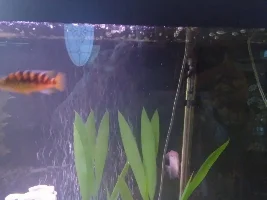
My high school has 4 tanks: (2) 180gal, 40gal, 5 gal. All have problems that range from small to full blown neglect. I have tried to care for these tanks before, but I found it impossible with the the equipment they have there. Also they are barely cared for over the summer so any work I do goes up in smoke. The 180gals are the worst one is set up with a mix of cold and tropical fish. It has no heater the filter is a 60gal HOB, it has a UGF set up w/ the pipes and everything but their are no power heads attached. Water changes are very far appart.
The other 180gal is set up as a native US fish tank. Filtration is the exact same, including the UGF w/ no power heads. Water changes are much more frequent on this tank. I have been complaining about the tanks to the teacher and I have been giving them stuff to read about cycling and basic maintenance. A lot of it came off this site. Conditions have improved slightly but no where near enough.
About a week ago about 50+ bait minnows where added to the native tank. I went in and complained on Friday, I also took a water sample from the tank. I tested it when I got home and found .25ppm of ammonia and .25ppm of nitrite, no doubt from all the minnows. I went back and complained to her today (tuesday), I told her not to add so many minnows at one time and told her the results of the water test. Most of the minnows had disappeared and their were only about 15 left. That was when she told me something very surprising. The DRN had come and done a check up on the tank and they had brought all the minnows with them and had added them all to the tank . People have suggested before that I contact the DNR about the tanks, but my senior year has been very busy and I have never gotten around to it. It surprises me that someone came in and even more so that they actually made the situation worse. They told the teacher to keep a school of bait minnows in the tank at all times. Also what left me speechless is that they didn't say anything about the water quality, the lack of filtration on the tank, or the heath of the fish.
So I'm not sure what to do here. I'm telling the teacher stuff that is the opposite what the DNR said. Of course the teacher is going to listen to the DNR (they can take the fish away) not to me a 17 year old high school student. More so the teachers are all biology teachers, you would think they would be bothered by how bad the tanks look and they would at least know the biology behind a aquarium. The two 180gal need at least $1000 put into them to get them to run properly. I'm not use to tanks this large so i've got no clue on the most efficient and cheapest way to filter and heat them. I know HOBs aren't going to cut it though . So ideas, opinions, suggestions, or anything else is welcome. Cuz I got nothing.
The other 180gal is set up as a native US fish tank. Filtration is the exact same, including the UGF w/ no power heads. Water changes are much more frequent on this tank. I have been complaining about the tanks to the teacher and I have been giving them stuff to read about cycling and basic maintenance. A lot of it came off this site. Conditions have improved slightly but no where near enough.
About a week ago about 50+ bait minnows where added to the native tank. I went in and complained on Friday, I also took a water sample from the tank. I tested it when I got home and found .25ppm of ammonia and .25ppm of nitrite, no doubt from all the minnows. I went back and complained to her today (tuesday), I told her not to add so many minnows at one time and told her the results of the water test. Most of the minnows had disappeared and their were only about 15 left. That was when she told me something very surprising. The DRN had come and done a check up on the tank and they had brought all the minnows with them and had added them all to the tank
. People have suggested before that I contact the DNR about the tanks, but my senior year has been very busy and I have never gotten around to it. It surprises me that someone came in and even more so that they actually made the situation worse. They told the teacher to keep a school of bait minnows in the tank at all times. Also what left me speechless is that they didn't say anything about the water quality, the lack of filtration on the tank, or the heath of the fish.So I'm not sure what to do here. I'm telling the teacher stuff that is the opposite what the DNR said. Of course the teacher is going to listen to the DNR (they can take the fish away) not to me a 17 year old high school student. More so the teachers are all biology teachers, you would think they would be bothered by how bad the tanks look and they would at least know the biology behind a aquarium. The two 180gal need at least $1000 put into them to get them to run properly. I'm not use to tanks this large so i've got no clue on the most efficient and cheapest way to filter and heat them. I know HOBs aren't going to cut it though
. So ideas, opinions, suggestions, or anything else is welcome. Cuz I got nothing.

 /www.jehmco.com/html/diaphragm_air_p....html#DAPMH8-15