What's new

Hi There.

jonnie5

New Member
Joined
Mar 11, 2008
Messages
5
Reaction score
0
Points
0
Yestarday I purchased a Aqua 320 tank (28ltrs). I was just wanting a chit chat and general advice on keeping the fish and condition of the tank in good order. I'm planning on just 2 goldfish (not sure yet what type)

I set up the tank yestarday rince everything with plenty of water ie gravel plastic plants etc got the tank up and running. I de-chlorinated the water and added some live bacteria according to the labels.

I just want to make sure I'm getting everything right before I buy the fish. I dont yet have a water testing kit. what would be your recommendations for this. How do I know whats right when I test the water. I have a syphon tube for cleaning. Some say take 25% water out and some say 50% which is correct. Also when I add the watre back in do I leave the water over night say to bring it to room temp? ANd do I dechlorinate before I fill the tank back up? Any help would be great
 
Yestarday I purchased a Aqua 320 tank (28ltrs). I was just wanting a chit chat and general advice on keeping the fish and condition of the tank in good order. I'm planning on just 2 goldfish (not sure yet what type)

I set up the tank yestarday rince everything with plenty of water ie gravel plastic plants etc got the tank up and running. I de-chlorinated the water and added some live bacteria according to the labels.

I just want to make sure I'm getting everything right before I buy the fish. I dont yet have a water testing kit. what would be your recommendations for this. How do I know whats right when I test the water. I have a syphon tube for cleaning. Some say take 25% water out and some say 50% which is correct. Also when I add the watre back in do I leave the water over night say to bring it to room temp? ANd do I dechlorinate before I fill the tank back up? Any help would be great

:hi: Welcome to the forum !! theres plenty of people ready and willing to help, good to see you've started researching !! first of all i would take a look at the Cycling section which goes step by step on how to prepare your fish's new home, Click Here

I would invest in a liquid test Kit that tests, Ammonia, nitrite's & nitrate, if your in the UK then your looking at about £18 for an API kit, DON'T bother withe dip strips there not worth the plastic there printed on !!!!! the test kits come with a colour display chart and instructions, your looking to have both the ammonia and Nitrite at ZERO, as both of these are detrimental to fish, you do need to ad the ammonia to the tank to start with to get the cycle going and the beneficial bacteria growing , when reading the cycle section it will explain everything.

with water changed generally its about 25% each week but if your testing your water stats you may find that you dint need to do a water change each week, remember your needing to keep the ammonia and nitrites at zero, Nitrates are not as bad to the fish and you will always find some nitrates in your tank.

I haven't had a cold water tank myself but i would suggest mixing cold and warm water together to get a temperature match the the tank, depending on the time of year and atmospheric temp you may not need to mix any warm water.

I add the dechlorinate to the tap water when I'm putting into the bucket before it goes into the tank and give it a good swirl round so it all mixes in. Dechlorinate works strait away so the water can be put strait into the tank.

as mentioned Ive not kept cold water fish before but some friends have and some goldfish can get BIG !!! and will soon outgrow your tank. i would do some more research, goggle gold fish and info on them and do research to see exactly how large the goldfish can grow. some of the more experienced people here will no doubt be able to provide you with some good links that will help and also look at the pinned topics on the forum, there is a wealth of information here.

Good luck with the fish keeping and welcome to the hobby

Scott
 
First you need to cycle your tank, this can take anywhere from 3 weeks to a couple of months depending on how you do it. Most will suggest a fishless cycle since it is quicker and easier on the fish. The most important thing when testing the water is that you have no ammonia or nitrite, you will also want a liquid test kit, the little strips are really inacurate. When changing water there isn't really a set amount you have to remove, it all depends on much waste your fish produce. When filling the tank back up I suggest adding the dechlorinator into the tank, then adding water from the tap to the tank. It will be dechlorinated as it is added. You don't have to leave the water out over night, just make sure it is the same temp as the tank.
 
Many thanks guys I did see the beginers guides about the cycling. I'll start off with one fish and after a few weeks if everything goes well I might add a second.
 
If the Nitrates and ammonia were to go above zero should I be cleaning the tank.
 
Many thanks guys I did see the beginers guides about the cycling. I'll start off with one fish and after a few weeks if everything goes well I might add a second.

Don't put any fish in until the tank has fully cycled !!!!! thats what the ammonia was for to get the cycle started, its all about chemistry and some times needs time. Putting a fish in that tank is the equivalent as some one locking you in a car and pumping the exhaust into the car then waiting till the carbon dioxide has gone away by seeping out the gaps, theres a small chance you will survive but your gonna have a crappy life and big problems all the time but chances are by the time everything has sorted itself your dead. not a nice thing to put any person or animal through when there is no need to.

If you chose to do a fish in cycle you will need to do water change every time the water stats go above zero for both ammonia and nitrites, which can mean doing 2/3 even 4 water changes a day for the same length of time it will take by doing a fish less cycle. as well as constantly testing the water.

I personally wouldn't want to put the fish though the pain, its not nice watching an animal die or suffer because your doing something you don't have to, and looking at a sick fish in a tank is not going to be any joy.

Scott
 
Many thanks guys I did see the beginers guides about the cycling. I'll start off with one fish and after a few weeks if everything goes well I might add a second.

Don't put any fish in until the tank has fully cycled !!!!! thats what the ammonia was for to get the cycle started, its all about chemistry and some times needs time. Putting a fish in that tank is the equivalent as some one locking you in a car and pumping the exhaust into the car then waiting till the carbon dioxide has gone away by seeping out the gaps, theres a small chance you will survive but your gonna have a crappy life and big problems all the time but chances are by the time everything has sorted itself your dead. not a nice thing to put any person or animal through when there is no need to.

If you chose to do a fish in cycle you will need to do water change every time the water stats go above zero for both ammonia and nitrites, which can mean doing 2/3 even 4 water changes a day for the same length of time it will take by doing a fish less cycle. as well as constantly testing the water.

I personally wouldn't want to put the fish though the pain, its not nice watching an animal die or suffer because your doing something you don't have to, and looking at a sick fish in a tank is not going to be any joy.

Scott

I will read the cycle thread again when I get home from work. How will I know the cycle is comlete?
 
I will read the cycle thread again when I get home from work. How will I know the cycle is comlete?

This is the method I have used to cycle 5 tanks (from 2.5 to 75 gallon) and it has worked perfectly. I think it is the simplest and requires the least amount of work. First add your ammonia to raise the level to 5 to 6 ppm. Now you simply wait on the ammonia to drop back to around 1 ppm. Spend the time researching the fish you like and see if they are compatible with each other, with your tap pH, tank size, etc.

Test daily to see what the ammonia reading is. There is no use to test for anything else. Nitrite and nitrate won't be present until some ammonia has processed. Ammonia will raise your pH so no use to test it either. Once you see a drop in the ammonia, test for nitrite. There should be some present. When the ammonia drops back to about near zero (usually takes about a week), add enough to raise it back to about 3 to 4 ppm and begin testing the nitrite daily.

Every time the ammonia drops back to zero, raise it back up to 3 to 4 ppm and continue to check nitrites. The nitrite reading will go off the chart. NOTE FOR API TEST KIT USERS: When you add the drops, if they immediately turn purple in the bottom of the tube, your nitrites are off the chart high. You do not need to shake the tube and wait 5 minutes. If you do, the color will turn green as the nitrites are so high that there isn't a color to measure them with. Once the ammonia is dropping from around 4 ppm back to zero in 12 hours or less you have sufficient bacteria to handle the ammonia your fish load produces. Continue to add ammonia daily as you must feed the bacteria that have formed or they will begin to die off.

The nitrite spike will generally take about twice as long to drop to zero as did the ammonia spike. The reason for this is two-fold. First, the nitrite processing bacteria just develop slower than those that process ammonia. Second, you are adding more nitrite daily (every time you add ammonia, it is transformed into nitrite raising the level a little more) as opposed to the ammonia, which you only add once at the start and then waited on it to drop to zero. During this time, you should occasionally test for nitrate too. The presence of nitrate means that nitrite is being processed, completing the nitrogen cycle. The nitrate level will also go off the chart but you will take care of that with a large water change later. It will seem like forever before the nitrite finally falls back to zero but eventually, almost overnight, it will drop and you can celebrate. You are almost there. Once the bacteria are able to process 4 or 5 ppm of ammonia back to zero ammonia and nitrite in about 10 to 12 hours. You are officially cycled.

At this point, your tank will probably look terrible with brown algae everywhere and probably cloudy water. As I mentioned, the nitrate reading will also be off the chart. Nitrates can only be removed with water changes. Do a large water change, 75 to 90 percent, turn the heat down to the level the fish you have decided on will need, and you are ready to add your fish. You can safely add your full fish load as your tank will have enough bacteria built up to handle any waste they can produce.

The quote above has been taken from Rdd1952's post on cycling a tank. and explains what to be looking for when cycling and how to tell when your cycle is complete.
Scott
 
Yestarday I purchased a Aqua 320 tank (28ltrs). I was just wanting a chit chat and general advice on keeping the fish and condition of the tank in good order. I'm planning on just 2 goldfish (not sure yet what type)

I set up the tank yestarday rince everything with plenty of water ie gravel plastic plants etc got the tank up and running. I de-chlorinated the water and added some live bacteria according to the labels.

I just want to make sure I'm getting everything right before I buy the fish. I dont yet have a water testing kit. what would be your recommendations for this. How do I know whats right when I test the water. I have a syphon tube for cleaning. Some say take 25% water out and some say 50% which is correct. Also when I add the watre back in do I leave the water over night say to bring it to room temp? ANd do I dechlorinate before I fill the tank back up? Any help would be great

slow down, 28 litres, 6.2 UK gallons, or 7.3 US gallons is far too small for Goldfish, please choose another fish, its not realy fair to keep them in crowded conditions which will cause health problems and create unhappy fishies

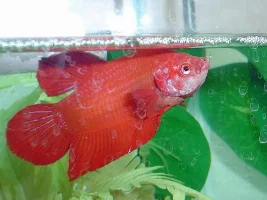
Personally I would keep two betta fish in there, partician the centre so they dont kill each other...
Alternatively you could get a few guppies, and a stress the word 'few' no more than 5 I would say (although preferably guppies should be kept in a large tank as they are energetic fish and can get nippy if cramped)
Similarly, you could get a few neon tetra, (4-5)
 
slow down, 28 litres, 6.2 UK gallons, or 7.3 US gallons is far too small for Goldfish, please choose another fish, its not realy fair to keep them in crowded conditions which will cause health problems and create unhappy fishies

Ditto, can't believe this hasn't already been pointed out. A goldfish will grow in excess of 12 inches long and produce vast amounts of waste, you would want a minimum of 20 gallons for just one fancy goldfish. A common or comet goldfish would require even more, or even better a large outdoor pond.

I would consider a betta (siamese fighting fish) or a community of very small fish such as sparkling gouramies, the smaller rasbora species, endlers and shrimps. Water quality is paramount in such a small volume of water so it's good to see you're learning your stuff before fish go in there :good:
 
Thanks for your advice guys. I will look into what kind of fish to buy. I would prefere cold water as I bought a tank without a heater
 
Thanks for your advice guys. I will look into what kind of fish to buy. I would prefere cold water as I bought a tank without a heater

To be honest, it's better to buy a heater even if you have colder water fish, becuase temperature fluctiation can cause stress, and weaken the immune system thus making fish more prone to disease, which is a clear risk in a small 6 gall tank as disease would be more likely to occur

Temp fluctuation can also bring about white spot (if the parasite is present, which it may well be if you choose to shop at a crappy place like walmart etc
 
I did the same, but realised there were more tropical fish than cold water, and they're more colourful so i looked into a heater and to be honest they're very cheap, about £10. I would say that you would be a lot better off getting a small heater and tropical fish, as perhaps if you like it you might want a biger tank and then you could perhaps move the fish from the small tank to make a larger comunity, depending on what fish you buy. I bought a Betta so even though i've now bought a new tank (not even been 3 months) the betta will have to stay in is 3 gallon tank. But a heater would be a worth while investment. Also i think i've read that heaters can be benificial for coldwater fish to stop the water temp changing to much, as long as you can set it to a fairly cold setting.
 
If you really want cold water fish there are several to choose from including the white cloud mountain minnows. I've always kept tropicals but there is no reason not to get something you will enjoy that suits your personal desires. Try talking to people abotu the fish you see at the store. There are probably plenty of others that you could get. Every stream, pond or lake around me has some small fish in it and right now the ice is just melting off for the spring. There is nothing in that water that can't live without a heater.
 

Most reactions

Back
Top