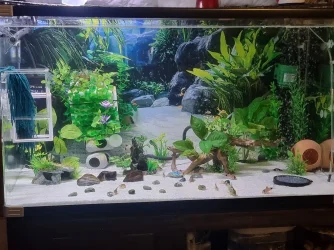
like @Uberhoust ... I like to burry my air line under the substrate, and place 2-3 inch stones on top, typically along the back of the tank, but two tanks have them on the sides I like the holes idea, but I use 10 inch air bars, and the 4 tanks I have set up that way, have been running more than 2 years and showing no signs of clogging... probably having a high quality pump, and enough air stone material for the air to find an alternate route out keeps them running longer... I also use 4 and 6 inch big block type stones, that show no signs of giving up, and several tanks that just have sponge filters, with no air stones
back in the dark ages, when all my tanks ran under gravel filters I didn't like the little air line sized "stones" as they plugged up too fast, I started using 4 inch air bars, which blocked some of the flow in the lift tubes, but I found they increased velocity, equaling things out... I still have one of my under gravel filters run by air, with 4 inch air bars in the lift tubes, which I reset up that way 3 years ago, when I restarted in the hobby...
back in the dark ages, when all my tanks ran under gravel filters I didn't like the little air line sized "stones" as they plugged up too fast, I started using 4 inch air bars, which blocked some of the flow in the lift tubes, but I found they increased velocity, equaling things out... I still have one of my under gravel filters run by air, with 4 inch air bars in the lift tubes, which I reset up that way 3 years ago, when I restarted in the hobby...