caffeine thought for today… city mouse, or country mouse???

In Gabon, we exchanged elephant noses, which were plentiful in our nets, for Parananochromis gabonicus, which were not. I had a conversation with some local fishers (it's seen as a job for women and children where we were, but for men and women farther south. Different cultures). The recipe was to gather Mormyrids (the best tasting, they said), dwarf Cichlids, Neolebias, Aphyosemion cameronense, Enteromius jae and all sorts of small stuff and boil them into a broth. The small bones would dissolve. Add vegetables and spices, and there you have it.

They weren't eaten as 2 cm fish filets, but as stock. The idea of Aphyosemion cameronense soup is pure painful to me, but there you have it.

In Benin's markets, there were baskets full of Aplocheilichthys spilauchen, a brackish relative of P normani lampeyes, at about the same size. They too were sold for soup stock.

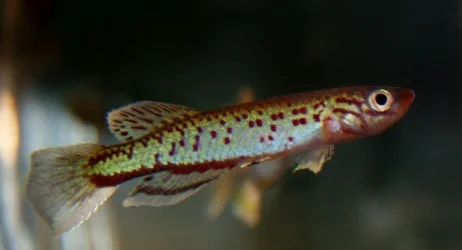
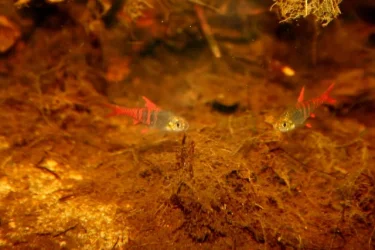
Pic 1 Aphyosemion cameronense. Pic 2 Enteromius jae barbs.
 

Attachments

  • cameronense1a (640x347).webp
    cameronense1a (640x347).webp
    19 KB · Views: 22
  • byejae3 (640x427).webp
    byejae3 (640x427).webp
    45.1 KB · Views: 23
Yes we are awful people, We give our fish better and more regular food than they will get in the wild- this is a horrible thing to do.

When a fish get sick in the wild, it usually dies. How dare we give them meds to save them.

In the wild many fish are food for other creatures. Giving our fish a life without such a threat isn't fair. They deserve to have the opportunity of being eaten.

And in our tanks we deprive the opportunity for our fish to suffer the effects of potential episodes of dought and pollution.

And if we keep rare fish and breed them after they have been eradicated in the wild are we not playing god? May we burn in hell for doing this.......

The very first fish auction I attended had a tank with two huge Pacus in it at the entrance to the room where the auction was held. They were to be auctioned. They were the last item that went up for bids. There was only one bidder and he bought them very cheaply. He bought them to have for dinner. In the wild. Large clown loaches are eaten by the local people.
We aren't awful people, but we feed our fish processed foods that don't necessarily meet their nutritional needs. We actually create fish obesity, something not seen in nature. We can do better.

We don't know a lot about med usage, and cause most of the diseases we treat by using too small tanks and slacking on our responsibility to do water maintenance. Every large aquarium store sends someone to clear out the 'deads' before opening, because of poor practices. We can do better.

I had fish and chips last week, so I'm one of those predators. In the wild, fish fall to predators. In tanks, they die of neglect in too many cases. We can do better.

We give our fish a higher risk of dying of drought or pollution in poorly maintained tanks. Then we buy more. We encourage sellers of long fins, stunted balloon bodies and other genetic problems that we cultivate industrially. They harm the fish, either internally as in balloons with scoliosis, or by hampering their ability to swim, as in long fins.

We fool ourselves by thinking a human with a few decades of fishkeeping time can maintain extinct and endangered fishes without working with a governmental, funded institution that can continue the work after we've gotten bored or died. A million year old species saved by a human with an 83 year lifespan? We aren't serious. We can do better.

If people eat pacus at fish clubs (not suggested as aquarium conditions and medications affect food safety with fish), why are we keeping them in the first place? They're too huge. We make very irresponsible choices, as many an oversized but under resourced pacu, pleco, goldfish, clown loach, bala shark or large Cichlid has learned.

To our credit, we're here to learn to do better. We've learned a lot and may actually share in a positive manner to help each other improve our skills, if we want to. That's the good side of the hobby to me - that people get past collecting live ornaments and start really learning how to balance their curiosity and consumption with information sharing and best practices. Aquarists have done many positive things so far, with many more to come.

 
AI Overview

Humans have driven at least 80 to 100 freshwater fish species to extinction, according to assessments by the International Union for Conservation of Nature (IUCN) Red List and major conservation reports like the World's Forgotten Fishes. [1, 2, 3]

Key Facts on Fish Extinctions
    • Freshwater Toll: The vast majority of documented modern fish extinctions are freshwater species due to intense localized habitat destruction. Recent studies update the total number of extinct freshwater species closer to 100, with an additional 11 species listed as extinct in the wild. [1, 2, 3]
    • Marine Extinctions: Ocean-dwelling fish extinctions are harder to document and rarer to confirm; only about 3 marine fish species are widely acknowledged to have gone extinct over the last century. [1]
    • Extinction Rate: Modern freshwater fish are going extinct at a rate estimated to be more than 100 to over 800 times faster than the natural background rate found in the fossil record. [1, 2]
    • Current Threats: Roughly one-third of all freshwater fish species are currently threatened with extinction due to dams, pollution, overfishing, and invasive species.

I doubt all the fish keepers combined in the past 100 years can equal the above.

Over the past 25 years a lot of fish have passed through my tanks. Most of the ones which have died prematurely did so because of mistkes ai made/. Despite that I have had more fish born in my tanks than have died there and most ot tthe new ones have gone out to new homes with responsible keepers. They sell for too much for most in the hobby to want to spend.
 
To my knowledge, we haven't aquarium driven anything freshwater to extinction. We have come close with several species, but for all, governments were able to step in in time and bring in conservation regulations. Melanotaenia boesemani was one, and I believe the easily bred CPD was close at one point.
 
Zebra plecos would be one such species. They are hanging on by a thread according to Leandro Sousa. This was due to the demand and there being illegal to remove from Brazil combined with the Belo Monte dam. To many have been collected and smugled out/ That killed a lot of them as to smuggle them they need to be hidden and that also means poorly packed.

If Brazil catches somebody, I believe the fish are confiscated and killed. But the smuggling route is to sneak them out of Brazil and into Colombia from where they get shipped. A lot of fish die on the way to Colombia.

Here is what the Google AI said when I asked, "what species of fish is extinct in the wild but survives in aquarriums"


Several fish species are extinct in the wild (or nearly so) and survive only thanks to aquariums, zoos, and private hobbyists.

Notable Species Extinct in the Wild (Surviving in Captivity)
    • Tequila Splitfin (Zoogoneticus tequila): Native to a single river system in Jalisco, Mexico, this small livebearing fish went extinct in the wild in the late 20th century due to pollution and invasive species. It survived because aquarists and institutions like the Chester Zoo kept populations alive, leading to a successful conservation reintroduction project in recent years. [1, 2, 3]
    • Potosí Pupfish (Cyprinodon alvarez_i), La Palma Pupfish, and Charco Pupfish: These specialized Mexican pupfish species vanished from their native spring-fed natural habitats as local water levels dropped, and they now survive exclusively under human care in specialized conservation facilities. [1]
    • Bumblebee Catfish (Microglanis iheringi / specific rare locality variants) & Select Lake Victoria Cichlids: Many specialized cichlid species from Lake Victoria (such as Astatotilapia piceata) disappeared from their natural habitats following the introduction of the invasive Nile perch and severe ecological disruption, persisting primarily in public aquariums and dedicated breeding programs. [1]

Functionally Extinct or Critically Saved by Hobbyists

  • White Cloud Mountain Minnow (Tanichthys albonubes): Hailing from China, this popular freshwater aquarium fish was long considered functionally extinct in its native wild habitats due to heavy pollution and habitat destruction. Its entire survival relied on the global aquarium trade and home hobbyist breeders, though small reintroduced or remnant wild populations have occasionally been scouted.
Hobbyists may not be the direct cause of extinction, but humans in general are often the cause. The building of dams is one thing that harms aquatic life. So is man made pollution. Small scale gold mining needs water and then uses cycanide :-(
 

Most reactions

Back
Top