SierraDelta
New Member
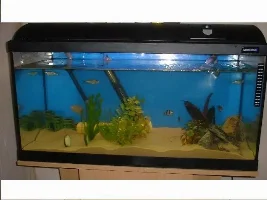
My 29-gallon Southeast Asian community is still pretty new, but I can already tell I'm going to want to move it en masse to a larger aquarium before long (within the next several months). I'm anticipating moving it to a 55-gallon aquarium, then using the 29-gallon aquarium to start an Amazon community. I'm not really happy with the gravel I used in the old aquarium (a yellowish gravel that does nothing for the fishes' colors), so I won't be moving that, but I will be moving the plants and furniture with the fish.
I've been thinking about the best and safest way to do this, and here's what I plan right now. I've never done this before, though, so if anyone has any suggestions or comments, I'd love to read them!
The day before the move:
Do a partial water change on the old tank (mainly to vacuum the gravel as well as I can)
Set up the new tank, positioning the heaters horizontally near the bottom of the tank (because it'll start just part-full)
Fill the new tank about half-way with fresh, treated water
Let the tank heat and filter overnight.
The day of the move:
Transfer live plants and furniture from the old tank to the new tank.
Transfer about half of the water from the old tank to the new tank (I figure this will help minimize the risk of shock, but is it necessary?), or as much as I can without the water level falling below the filter intake in the old tank.
Unplug the heater in the old tank (since it's now exposed to air).
Transfer fish, in batches, into ziploc bags with water and air. Float the bags in the new aquarium.
Unplug the old filter
Transfer most of the remaining water from the old aquarium to the new aquarium.
Finish filling the new aquarium with fresh, treated water.
Move the power filter from the old aquarium to the new aquarium and turn it on (it's not powerful enough to process a 55 gallon aquarium, but its established biofilter is better than nothing for now)
Acclimate the fish to the new aquarium water gradually and release them into the new aquarium.
Enjoy watching the fish explore their new, larger, surroundings
After a while (weeks? a month?):
Refill the old aquarium
Move the old filter back to the old aquarium
Populate the old aquarium with new fish
My biggest concern here is that I don't want to disrupt the nitrogen cycle any more than I have to, and I want to keep the biofilter in the old filter alive. So, a few questions:
1) I assume that doing things the way I've described will significantly retard cycling of the new filter. The bacteria in the old filter will metabolize most of the ammonia and nitrites, so development in the new filter will be slow. And the colonies in the new filter will stay small, since there is only a limited amount of food available to them. How long should I run both filters? (If this is even the right way to go about this?)
2) Is there a better way? Can I somehow seed the new filter with bacteria from the established filter? I doubt I'd be able to shove the old filter floss into the new filter (the mechanical and charcoal filter would block the bacteria). I've tried dropping gravel in mesh bags into the filter (with no result).
3) During the old tank's "down time," the bacteria in the soil are going to die. Should I expect a significant cycle time in that tank once I start it back up, assuming the filter is still teeming with bacteria?
I've been thinking about the best and safest way to do this, and here's what I plan right now. I've never done this before, though, so if anyone has any suggestions or comments, I'd love to read them!
The day before the move:
Do a partial water change on the old tank (mainly to vacuum the gravel as well as I can)
Set up the new tank, positioning the heaters horizontally near the bottom of the tank (because it'll start just part-full)
Fill the new tank about half-way with fresh, treated water
Let the tank heat and filter overnight.
The day of the move:
Transfer live plants and furniture from the old tank to the new tank.
Transfer about half of the water from the old tank to the new tank (I figure this will help minimize the risk of shock, but is it necessary?), or as much as I can without the water level falling below the filter intake in the old tank.
Unplug the heater in the old tank (since it's now exposed to air).
Transfer fish, in batches, into ziploc bags with water and air. Float the bags in the new aquarium.
Unplug the old filter
Transfer most of the remaining water from the old aquarium to the new aquarium.
Finish filling the new aquarium with fresh, treated water.
Move the power filter from the old aquarium to the new aquarium and turn it on (it's not powerful enough to process a 55 gallon aquarium, but its established biofilter is better than nothing for now)
Acclimate the fish to the new aquarium water gradually and release them into the new aquarium.
Enjoy watching the fish explore their new, larger, surroundings
After a while (weeks? a month?):
Refill the old aquarium
Move the old filter back to the old aquarium
Populate the old aquarium with new fish
My biggest concern here is that I don't want to disrupt the nitrogen cycle any more than I have to, and I want to keep the biofilter in the old filter alive. So, a few questions:
1) I assume that doing things the way I've described will significantly retard cycling of the new filter. The bacteria in the old filter will metabolize most of the ammonia and nitrites, so development in the new filter will be slow. And the colonies in the new filter will stay small, since there is only a limited amount of food available to them. How long should I run both filters? (If this is even the right way to go about this?)
2) Is there a better way? Can I somehow seed the new filter with bacteria from the established filter? I doubt I'd be able to shove the old filter floss into the new filter (the mechanical and charcoal filter would block the bacteria). I've tried dropping gravel in mesh bags into the filter (with no result).
3) During the old tank's "down time," the bacteria in the soil are going to die. Should I expect a significant cycle time in that tank once I start it back up, assuming the filter is still teeming with bacteria?

 ? If you have a cycled tank, you can use it to instantly cycle other tanks if the cycled tank has a large enough bio-load. I have only ever cycled once.