I decided to give this an individual post, as there has been some misunderstanding in this thread, and the posts were appearing faster than I could keep up.
First, some clarification on terms. Water tests include those for
parameters, which are GH, KH, pH and temperature. There are also water
conditions, such as ammonia, nitrite, nitrate. All of these are important and should be frequently tested initially, then less frequent once they are stable--which is the whole idea behind significant water changes: water stability; the tests (hopefully) prove you are doing it right. The pH and nitrate should never vary much if at all from one week to the next.
Parameters. Unless you are specifically targeting or adjusting GH and KH, once you know these for the source water they will remain basically the same. The temperature obviously can be controlled so that should be stable. That leaves the pH the only one of the parameters that should be periodically tested--frequently or infrequently depending--and always at a sign of a problem. The pH should stabilize over the course of the first few months, and if the aquarium is biologically balanced, and there is no adverse interference by the aquarist with the laws of nature respecting chemistry and biology that govern any aquarium, they will remain stable for years. With regular substantial water changes obviously.

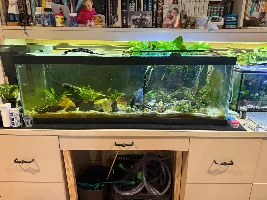
My fishroom before I moved last year had eight aquaria, and all had zero GH and KH, temperature 25-26C/76-77F. Each received a WC of 60-70% weekly. The pH varied depending upon the individual tank's biological system [number of fish], but in keeping test records going over a several-year period, the pH in each tank never varied by more than one or at most two decimal points. Tank "A" had a pH of 6.2 to 6.4 over several years; tank "B" had a pH of 5 to 5.2 over the same period, etc. That is stability, and should be the goal. A variable pH over time means something is out or the system has changed.
Conditions. Once the aquarium is cycled, and after a couple of subsequent weeks, tests for ammonia and nitrite should not be necessary; here again, at the first sign of something being wrong, always test these just to (hopefully) eliminate them. Nitrate is different. Nitrate, like pH, should never significantly vary once the tank is established. If nitrate increases from water change to water change, something is out of balance, whether it be fish load, inappropriate combination of fish species, overfeeding, insufficient filter cleanings, insufficient water changes...whatever. Fluctuating nitrate does impact fish, but it is a warning sign that something is wrong in the system. In my afore-mentioned tanks, over the same several years of testing, nitrate was always in the 0-5 ppm range in each tank.
When to test. Before a water change, always, until it becomes obvious that the tank is established and the need for frequent tests is no longer present. Future sporadic tests (pH and nitrate) should again always be prior to a weekly water change. The reason for this is to ensure you are seeing the actual permanent state of the system. Seven days after the last water change is sufficient to detect whether the aquarium's biological balance is or is not stable. You can also do the same tests the day after the water change; the stability will soon be evident, and no longer will it be necessary for these post-water change tests (unless something occurs).



 TFF is always here if you need advise.