Mikaila31
Always Watching
OK
@Mikaila31
I think you've missed the point of this topic.This is about giving someone who's asking the question of stocking a logical procedure in ascertaining their own stocking limits.Stocking is part art part science. Everyone stock differently and may methods work. Experience is very important, what one person can do may not work for another. I personally put little emphasis on the filters bio-capacity. However I also run densely planted tanks. Around half of my tanks are unfiltered yet do perfectly fine with a "good" stock. Simply using plants as filtration nitrates generally don't build up as ammonia is taken up by the plants, however I add nitrate to a lot of my tanks to make sure some form of nitrogen is always available. I stock heavy when I can, 15 neons in a 60 liter I would say is light. Even filterless you could manage 30 neons in a 60 liter tank and nitrates would stay stable despite that load. Yet water changes are still done, because there is more to water changes then removing nitrates. I did water changes today in all my tanks and I know nitrates now are higher then before I changed the water.
To clarify I should have refered to the bio load as the systems as opposed to the filters exclusively.Apologies or the confusion.Technically I would argue that even your 'filterless tanks' are not filterless at all.If you look at the role of a standard filters bio function water is merely passed over media harbouring colonies of bacteria which process ammonia and nitrite.This is no different to water passing over substrate in your tanks or any other surface in which the bacteria can gain a foot hold.The plants can only utilise a finite amount of ammonia at any one time.The rest is processed by the bacteria in the system.This can be exceeded at which point the system would,of course, be overstocked.Even in the 'filterless' system you describe above a logical procedure as setout previously can be utilised to ascertain a stocking limit.
It's simply not a case of whether I want it to be or not.It's a contradiction.There is a stock limit to any system.If this is exceeded then it is overstocked.If a system is unable to cope with the demands placed upon it then clearly it cannot be described as successful.So a "successfully overstocked tank" is possible weather you want it to be or not.
What I think you actually mean is," it's possible to successfully heavily stock a tank." Yeah fine.
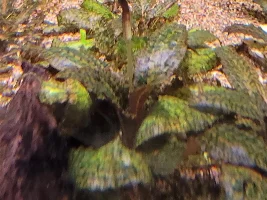
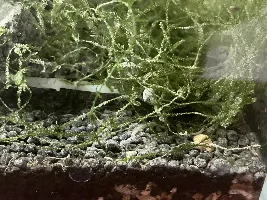
Its clear you do not have much experience with planted tanks. Plants consume a great deal more then you realize. I can assure you that plants ARE my primary role of filtration in most of my tanks. Most my tanks do have regular water movement however some sit stagnant half the day with no water movement at all, a few always sit stagnant and have no pump at all. On top of that its often recommended that you do not cycle planted tanks. I can tell you none of mine have been "cycled". I typically set them up with plants, give them a week or so to just establish then I will stock anywhere from 1/2 way to completely full in one go. Ammonia will not be detectable, not how I run my tanks. Plants are also recommended to combat a minicycle as they can easily be ammonia sponges if you do things correctly. No lake out there depends upon bacteria to remove fish waste, it is done by plants. Its very easy to get a fish tank to control wastes naturally with plants. Its quite possible to setup a planted tank with a heavy bioload then have it still read 0ppm or close for nitrate a week later.
Again plants have a much larger effect then you realize. Before I moved off well water my first soil tank would consume 20ppm of nitrate in my tap water a week and that was with a robust bioload and no filter. Nitrate is pretty harmless to fish. The LD dosage is crazy high. I dose nitrates every week and aim to keep them around 20ppm for the plants. I've had fish like german blue rams spawn in 40+ppm of nitrate, I'm sure if they were bothered by it they wouldn't of done that. Even when I kept it lower then that they never felt like spawning lol. I agree with the 'general' saying that in an unplanted tank nitrate should be around 20ppm higher then tap with a good stock at the end of the week. There are many ways to control nitrates and nitrates can be used somewhat to determine bioload in a tank but you can not tell this will just a single reading at one point. I test nitrates on all my tanks one or 2 times a year but it takes multiple tests to determine anything. I test to see how the tank is moving nutrients and if I need to adjust or not. For any of the readings to mean anything I have to test the tap, then the tank right after a water change and fertilizer dose, then at the end of the week before a water change. Only then does it really say anything about what is going on in the tank.


 /www.elearnenglishlanguage.com/difficulties/youryoure.html , also


 .
. .
. I don't think there's cause to be rude either.You call us for carrying on like t..ts but you couldn't help jumping in yourself.