What's new

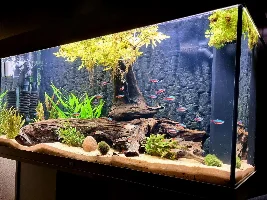
Rio Orinoco Biotope (H. Osteocarus, P. Simulans)

@CassCats all your tanks are incredible!
 
@CassCats all your tanks are incredible!
Thank you. Though if you seen the state of a couple, you may disagree on all of them being incredible lol. One is refusing to keep any plants alive, even ones fine in my other tanks. Same lights, same depth, same parameters, same plants and they refuse to do anything but melt 🤣 and another isnt doing too great either but that one i think is a floater problem smothering needy plants.

Another is my betta tank with crypts. They melt each time ive added fertilizer and I cant figure it out. Going through a curse I think lol
 
While perhaps not relevant to this aquarium I thought i would mention Axelrodia riesei as a very pretty smaller alternative to green neon tetra also there are of course morse code tetra and tucano tetra though at least in usa the prices tend to get quite steep esp on the last one. There is also the humming bird tetra though in truth i prefer the other three by a bit and the axelrodia riesei are very inexpensive.

That doesn't mean any of these are better than your choice just mentioning for consideration of you have future project and want to try something a bit different.
 
While perhaps not relevant to this aquarium I thought i would mention Axelrodia riesei as a very pretty smaller alternative to green neon tetra also there are of course morse code tetra and tucano tetra though at least in usa the prices tend to get quite steep esp on the last one. There is also the humming bird tetra though in truth i prefer the other three by a bit and the axelrodia riesei are very inexpensive.

That doesn't mean any of these are better than your choice just mentioning for consideration of you have future project and want to try something a bit different.
None except axelrodia riesei are available to me at all, but yesss that is a good choice as an alternative. I didn't opt for it, however, because I initially was researching fish more suitable for my tap water, which reports on seriously fish claim A. riesei needed a touch softer than what I have, but P. simulans was just in my parameter range... but I then decided to cut my tap with distilled water anyways, so it would work with that.

*IF* I got a larger setup eventually down the road and wanted to upgrade this tank to a larger setup where a second shoal of tetras would be comfortable, that'd be a great choice. Thank you for that!


I had a very bad experience with Paracheirodon innesi back in the day with them being the meanest fish I had ever owned, so I was realllly hesitant on going with a relative, but glad I did because these guys are nothing like those demon neons I had. They're not even nippy with one another, which is nice.
 
None except axelrodia riesei are available to me at all, but yesss that is a good choice as an alternative. I didn't opt for it, however, because I initially was researching fish more suitable for my tap water, which reports on seriously fish claim A. riesei needed a touch softer than what I have, but P. simulans was just in my parameter range... but I then decided to cut my tap with distilled water anyways, so it would work with that.

*IF* I got a larger setup eventually down the road and wanted to upgrade this tank to a larger setup where a second shoal of tetras would be comfortable, that'd be a great choice. Thank you for that!


I had a very bad experience with Paracheirodon innesi back in the day with them being the meanest fish I had ever owned, so I was realllly hesitant on going with a relative, but glad I did because these guys are nothing like those demon neons I had. They're not even nippy with one another, which is nice.
Not sure if you have pencil fishes available but two smaller species are the tiny n. marilyn which i like quite a bit and n. margitaus which come in different colour morphs - which are bigger - maybe along the lines of neon tetra which you have but less violent ;)
--
Don't get me wrong and part of the reason for this post is some of the pencil fishes are extremely territorial - one species i have has been sold as Nannostamus sp. Sao Gabriel (pink lip) is extremely vicious and i've seen them go after my a. uaupesi.
 
Nice fish and set-up, Cass.

For a while I kept a group of Rio Atabapo Altum angels. One of he biggest potential issues keeping them was their lack of immunity from a lot of the nasties we normally have lurking in our tanks. I lost a number of imported Altums to this problem. I finally found a way to increase the survival odds by setting up a tank with everything in it being new. I took nothing from other tanks.

Based on how well you have done to date with so many species, I would bet you will not only do well with the new corys, but that they will spawn for you. And I don't believe you when you say you have tanks that do not look amazing. I have seen your tank pics for a number of years and they all leave me drooling.

I am curious about one thing. In tanks where you stain the water and lower the parameters, how do you handle water changes in terms of refill water. I had a digital monitor on the Altum tank and I would mix changing water a 20 gal. Rubbermaid trashcan. I just moved the probes from the tank to the can to get the range of numbers I needed. I stained the changing water using Rooibos.

Also, how are you fertilizing the crypts? If it is in the water colum, I would suggest that you might want to try using a substrate fert. instead.
 
Not sure if you have pencil fishes available but two smaller species are the tiny n. marilyn which i like quite a bit and n. margitaus which come in different colour morphs - which are bigger - maybe along the lines of neon tetra which you have but less violent ;)
--
Don't get me wrong and part of the reason for this post is some of the pencil fishes are extremely territorial - one species i have has been sold as Nannostamus sp. Sao Gabriel (pink lip) is extremely vicious and i've seen them go after my a. uaupesi.
Unfortunately no available pencilfish from the specific location here that are also suitable for the tank size. They were one I checked, but we also have very limited selections on pencils to begin with.


Nice fish and set-up, Cass.

For a while I kept a group of Rio Atabapo Altum angels. One of he biggest potential issues keeping them was their lack of immunity from a lot of the nasties we normally have lurking in our tanks. I lost a number of imported Altums to this problem. I finally found a way to increase the survival odds by setting up a tank with everything in it being new. I took nothing from other tanks.

Based on how well you have done to date with so many species, I would bet you will not only do well with the new corys, but that they will spawn for you. And I don't believe you when you say you have tanks that do not look amazing. I have seen your tank pics for a number of years and they all leave me drooling.

I am curious about one thing. In tanks where you stain the water and lower the parameters, how do you handle water changes in terms of refill water. I had a digital monitor on the Altum tank and I would mix changing water a 20 gal. Rubbermaid trashcan. I just moved the probes from the tank to the can to get the range of numbers I needed. I stained the changing water using Rooibos.

Also, how are you fertilizing the crypts? If it is in the water colum, I would suggest that you might want to try using a substrate fert. instead.
I do 50% distilled 50% tap. I add directly to the tank, but I also use pH balancing because my tap is unpredictable for the pH rising after a week, so the pH stays the same upon refilling. I do have a TDS pen, haven't cracked it out for this tank yet though lol I use gallon jugs that the distilled is sold in. Pour directly to tank. Fill up the tap one with tap water and refill that way.

That makes sense on the fish being prone to pathogens--they come from very acidic water in the wild where pathogens are not as prevalent naturally. Hence why I think I lost a few cories in quarantine at first.

The tannins of this tank is all from the leaf litter instead of rooibos tea like I normally would do. So they offer proper health benefits not just for anesthetic. That said, the big wood, the rocks, and substrate were all from existing setups.


Liquid ferts for the crypts but I use that for all my tanks and the crypts in my other tanks are fine. But my betta tank, they did not like it 🥲 literally went poof the next day every single leaf disintegrated and couple ramshorn snails keeled over too. Weird as heck.
 
I started with 50/50 but as my tap water parameters changed a bit I upped the amount of RO/DI water close to a 5 to 4 ratio. Out well water parameters change when we have abnormally low or excessively high amounts of rain. But my Ph also tended to rise between water changes, My goal was to keep it at 6.0. I would accept it lower but I was not happy as it drifted up towards 6.5. On occasion I would add some of the acid directly to the tank between water changes to counter a rise before it could get close to 6.5.

I used wood, almond leaves and alder cones in the tank directly. But, in order to maintain the color and to make the changing water prep a lot easier. I used the Rooibos in the changing water. I brewed it and then added the liquid :tea" that resulted. In order to get the pH a bit lower in the new water I often used muriatic acid. I dosed this in ml going into a 20 gal can. I have read on some sites that Rooibos softens water and.or lowers pH. My exprerience did not support this. I used it for the coloring and for the health benefits for the fish but I relied on other things to deal with pH and TDS.

One of the most interesting things I learned when acquiring stock was a Saturday shipping visit to the home of a person with a basement full of acid water tanks. He had a full time job unrelated to fish. He also had a battery operated digital meter which he could easily move between tanks. He also used acid to keep his tanks at the desired level of acidity. He explained that this wife usually did the water changes on the tanks while he was at work but that she would not dose the acid. He had been at work in the morning that day and I came that afternoon.

I watched as he moved the meter to a different tank, saw the pH reading, which was too high, and then watched him add acid directly to the tank. The result was that within a matter of a couple of minutes the pH dropped by 1.1. And another urban aquarium myth went out the window for me as a result. Clearly, changing the pH by that amount did not only not kill or harm the fish but they seemed not to react to the change at all.

What this reinforced for me was my belief that there are very few hard and fast rules when it comes to how we manage our tanks. While many fish could not handle such a drastic change in pH, some fish clearly could do so. This was reinforced when working with the Hypancistrus became a big part of my hobby. I learned these expensive fish were a lot hardier than the common wisdom indicated. I dropped the the temperature in a tank from the low 90sF to the high 70s in under an hour and the fish did not seem to react at all. Again, this we a species specific thing not a universal. Fish which live in seasonal waters must be able to handle the drastic changes that accompany the rapid changes during the changeover between the dry and rainy seasons. The parameter changes over the dry season are gradual but steady. The changes during the onset of the rainy season are drastic and rapid.

Imo, there are a few urban aquarium myths relating to Rooibos in tanks. It does not produce much in the way of tannins despite what I see written on some sites. It most certainly does not contain caffeine. Next, it is commonly sold in one of two forms, green and fermented. Unfortunately, all of the research I have found regarding fish and Rooibos looks at it as a feed additive as opposted to being added to tank water.

Clearly, when consumed, green contain more antioxidents. However, when Finarama, the wild angel site, had a forum still in existence the discussions only dealt with the red (fermented) variety. The South African bio-chemistry professor on the site was most certainly a proponent of the use of the red tea in Altum tanks. So was the chief administrator who was an expert on Altums. What I do know is that once I was able to have wild Altums settle down and show no need to treat, they did great in my Rooibos stained water. But, as noted, I used a lot more than Rooibos. For sure the almond leaves and alder cones contributed in this respect. But the Rooibos was the easiest and least messy contributor. I added the alder cones via a bag in a filter.

I think you are likely right about why you lost a few cory in Q, It is impossible for us as fish keepers to have any real idea of exactly whay microorganisms we may had or we may lack in our tanks. This is especially a problem when there are disease pathogens. Diagnosing fish diseases is almost impossible if there are no clear symptoms. Diagnosing Ich is a lot easier than most cases of velvet. My normal Q for wild fish is almost 3 months. Some of the things they may come with can take a long time to manifest.

Btw- I figure you have forgotten more about fish species than I actually know.

1775233077378.webp
 
I started with 50/50 but as my tap water parameters changed a bit I upped the amount of RO/DI water close to a 5 to 4 ratio. Out well water parameters change when we have abnormally low or excessively high amounts of rain. But my Ph also tended to rise between water changes, My goal was to keep it at 6.0. I would accept it lower but I was not happy as it drifted up towards 6.5. On occasion I would add some of the acid directly to the tank between water changes to counter a rise before it could get close to 6.5.

I used wood, almond leaves and alder cones in the tank directly. But, in order to maintain the color and to make the changing water prep a lot easier. I used the Rooibos in the changing water. I brewed it and then added the liquid :tea" that resulted. In order to get the pH a bit lower in the new water I often used muriatic acid. I dosed this in ml going into a 20 gal can. I have read on some sites that Rooibos softens water and.or lowers pH. My exprerience did not support this. I used it for the coloring and for the health benefits for the fish but I relied on other things to deal with pH and TDS.

One of the most interesting things I learned when acquiring stock was a Saturday shipping visit to the home of a person with a basement full of acid water tanks. He had a full time job unrelated to fish. He also had a battery operated digital meter which he could easily move between tanks. He also used acid to keep his tanks at the desired level of acidity. He explained that this wife usually did the water changes on the tanks while he was at work but that she would not dose the acid. He had been at work in the morning that day and I came that afternoon.

I watched as he moved the meter to a different tank, saw the pH reading, which was too high, and then watched him add acid directly to the tank. The result was that within a matter of a couple of minutes the pH dropped by 1.1. And another urban aquarium myth went out the window for me as a result. Clearly, changing the pH by that amount did not only not kill or harm the fish but they seemed not to react to the change at all.

What this reinforced for me was my belief that there are very few hard and fast rules when it comes to how we manage our tanks. While many fish could not handle such a drastic change in pH, some fish clearly could do so. This was reinforced when working with the Hypancistrus became a big part of my hobby. I learned these expensive fish were a lot hardier than the common wisdom indicated. I dropped the the temperature in a tank from the low 90sF to the high 70s in under an hour and the fish did not seem to react at all. Again, this we a species specific thing not a universal. Fish which live in seasonal waters must be able to handle the drastic changes that accompany the rapid changes during the changeover between the dry and rainy seasons. The parameter changes over the dry season are gradual but steady. The changes during the onset of the rainy season are drastic and rapid.

Imo, there are a few urban aquarium myths relating to Rooibos in tanks. It does not produce much in the way of tannins despite what I see written on some sites. It most certainly does not contain caffeine. Next, it is commonly sold in one of two forms, green and fermented. Unfortunately, all of the research I have found regarding fish and Rooibos looks at it as a feed additive as opposted to being added to tank water.

Clearly, when consumed, green contain more antioxidents. However, when Finarama, the wild angel site, had a forum still in existence the discussions only dealt with the red (fermented) variety. The South African bio-chemistry professor on the site was most certainly a proponent of the use of the red tea in Altum tanks. So was the chief administrator who was an expert on Altums. What I do know is that once I was able to have wild Altums settle down and show no need to treat, they did great in my Rooibos stained water. But, as noted, I used a lot more than Rooibos. For sure the almond leaves and alder cones contributed in this respect. But the Rooibos was the easiest and least messy contributor. I added the alder cones via a bag in a filter.

I think you are likely right about why you lost a few cory in Q, It is impossible for us as fish keepers to have any real idea of exactly whay microorganisms we may had or we may lack in our tanks. This is especially a problem when there are disease pathogens. Diagnosing fish diseases is almost impossible if there are no clear symptoms. Diagnosing Ich is a lot easier than most cases of velvet. My normal Q for wild fish is almost 3 months. Some of the things they may come with can take a long time to manifest.

Btw- I figure you have forgotten more about fish species than I actually know.

View attachment 379335
Always a treasure trove of experience and knowledge in your posts.

I do enjoy using red rooibos for some light staining on my tanks, but this one I haven't had the need to once botanicals were added. I am using some pods from a local reptile store and mini catappa leaves, and when I can source them I will use magnolia leaves I forage myself. But, rooibos is great but still does not affect pH either. And the lack of caffeine is good for fish, I don't know if I'd want to see pangio loaches hopped up on caffeine if it did contain it. Or perhaps I would 🤔 either way, tastes good as a bonus.

I could use oak, but where I cannot get the leaves found naturally in their native region, I want to choose leaves that mimic the shape of those and the shape of oak is too jagged. Live oak isnt a species where I live either, just the typical spike-shaped leaves. I watched several underwater wild videos of the region and nearly all of the natural leaf litter is rounded in shape.

I did experiment with some light staining vs darker staining with the tannins on this tank, but I decided to let the botanicals do their thing. The fish like it, its healthy for them, and the regions they come from are darker stained water--seasonally dependant.


It is interesting you mention fish that come from seasonally variable habitats being more tolerable to changes. I had construction on my street years back and it crashed my pH. They replaced all of the water pipes. My pH used to be a steady 7.6 but then they did the pipework and it crashed to 6.4 without warning. Let it sit in a cup for 7 days and that 6.4 rises to 7.8 on its own. I didn't find out it changed until I did a water change on one of my tanks and lost all of my Microdevario kubotai and all but 3 of my gastrodermus pygmaeus. The Microdevario crashed faster than the cories did. But, theyre a fish from a main river system in Thailand. They dont face as drastic of changes as some fish from other habitats. The cories, while from South America, gastrodermus pygmaeus are found in more permanent waterways vs floodplains. They may not be as resilient compared to species more likely to inhabit temporary habitats. That, or they were just too tiny to cope with the sudden change. I shall never know, but it is an interesting theory you bring up.
 
The weird thing or perhaps not so weird I have a lot more issues with tank raised fishes than wild fishes in my environment. I wonder if it is pathogens since nearly all my wc fishes come from the very soft acidic environment i keep and well tank raised fishes are never rasied in the correct type of water.
 
The weird thing or perhaps not so weird I have a lot more issues with tank raised fishes than wild fishes in my environment. I wonder if it is pathogens since nearly all my wc fishes come from the very soft acidic environment i keep and well tank raised fishes are never rasied in the correct type of water.
That I think is a factor, but also genetics too as some are very heavily inbred over the amount of time they've been in the hobby.
 
That I think is a factor, but also genetics too as some are very heavily inbred over the amount of time they've been in the hobby.
While hard to find - in truth hobby bred fishes seem healthier (by a wide margin) as oppose to farm raised fishes - and while inbreeding can be a factor here i suspect it has more to do with how they are obtaining the large spawns and raising the frys (which they er encourage to grow as fast as possible).

However when buying from a store it is almost impossible to determine the source of many of the fishes - though sometimes i can get an email and of course Jeff (aquaticclarity) is kind enough to actually list. I will for example never by another cz fish as my luck with them have been horrible and while it might not be the fish itself but the fish keeper i cannot say.
 
While hard to find - in truth hobby bred fishes seem healthier (by a wide margin) as oppose to farm raised fishes - and while inbreeding can be a factor here i suspect it has more to do with how they are obtaining the large spawns and raising the frys (which they er encourage to grow as fast as possible).

However when buying from a store it is almost impossible to determine the source of many of the fishes - though sometimes i can get an email and of course Jeff (aquaticclarity) is kind enough to actually list. I will for example never by another cz fish as my luck with them have been horrible and while it might not be the fish itself but the fish keeper i cannot say.
Yes, hobbyist vs farm is also another factor.

On the other hand, sometimes wild caught dont live as long as expected either because you receive adults of unknown ages depending on the case. My eques cories were such fish. I may have had them for 5 years though, but I am down to my last 1. They were full grown large sized adults when I got them.

I like getting juvenile wild caught fish most of all, I can get the most years out of them more accurately guessing their age.
 
When started to work int Apr. 2006 with the Hypancistrus from the Xingu, Barbie Fiorentino hooked me up with a guy selling his proven wild zebra breeding group, She had helped him acquire it and then to get it spawning. One of the first Qs I asked her was how many generations I could go with them before I might need to look to add some new genes. She told me at least 5. Since then I have read that fish are able to go through more "inbreeding" generations than a lot of other species.

However, zebras generally will need 1-3 year before they get a shot at breeding. They are ready sooner but nature wants the stronger healthier fish to breed with each other in most cases and zebras are not an exception. So in the wild young girls must wait their turn agewise. In a tank with a mixed sex group this is no different.

But, if one chooses a random male and female and put them together, in a tank, thy will breed if they can. There is no natural selection at work. This is why I always prefer wot work with a group not a pair or trio. With zebras I would want to have to be a reverse trio if I did things that way.

Now when it comes to fish which breed often and then produce a lot of eggs/offspring it becomes a lot easier for inbreeding to end up as an issue. The more offspring that spawning produces in nature is because a lot of the eggs/fry will not make it as they are food for a lot of things, sometimes even the parents. This often weeds out the weakest. But for people who are breeding for profit. Every sellable offspring is worth keeping as long as it is not deformed. And even then some sellers will still try.

But not all home based breeders are driven by greed. Some have very good habits when it come to how they do things. I know I took great pride in selling only healthy fish. But I was also lucky.I think the only time I gad to treat imports was a batch of Denisoni barbs where a few had columnaris. I treated the tank, beat back the disease and only lost one fish out of 50. But, most of my breedingstock were either wc fish or F1 from a breeder with a solid reputation.

(edited for a few typos and to change here to her in the second line so it read "One of the first Qs I asked her")
 
Last edited:

Most reactions

Back
Top