

TwoTankAmin
Fish Maniac
The sulphur molly (Poecilia sulphuraria), locally known as molly del Teapa, is an endangered species of poeciliid fish. It is endemic to the sulfur springs of the Mexican states of Chiapas and Tabasco and one of few fish able to withstand the toxicity of hydrogen sulfide. The high concentration of hydrogen sulfide in the water forces the fish to spend most of their time breathing on the surface, which exposes them to predatory birds; the species has evolved a wave-making behavior to avoid predation.
I caught a piece on TV today about these fish. They are quite interesting as the above describes. The program explained how these fish, which live in great number close to the surface, manage to avoid being predated upon by the local birds.
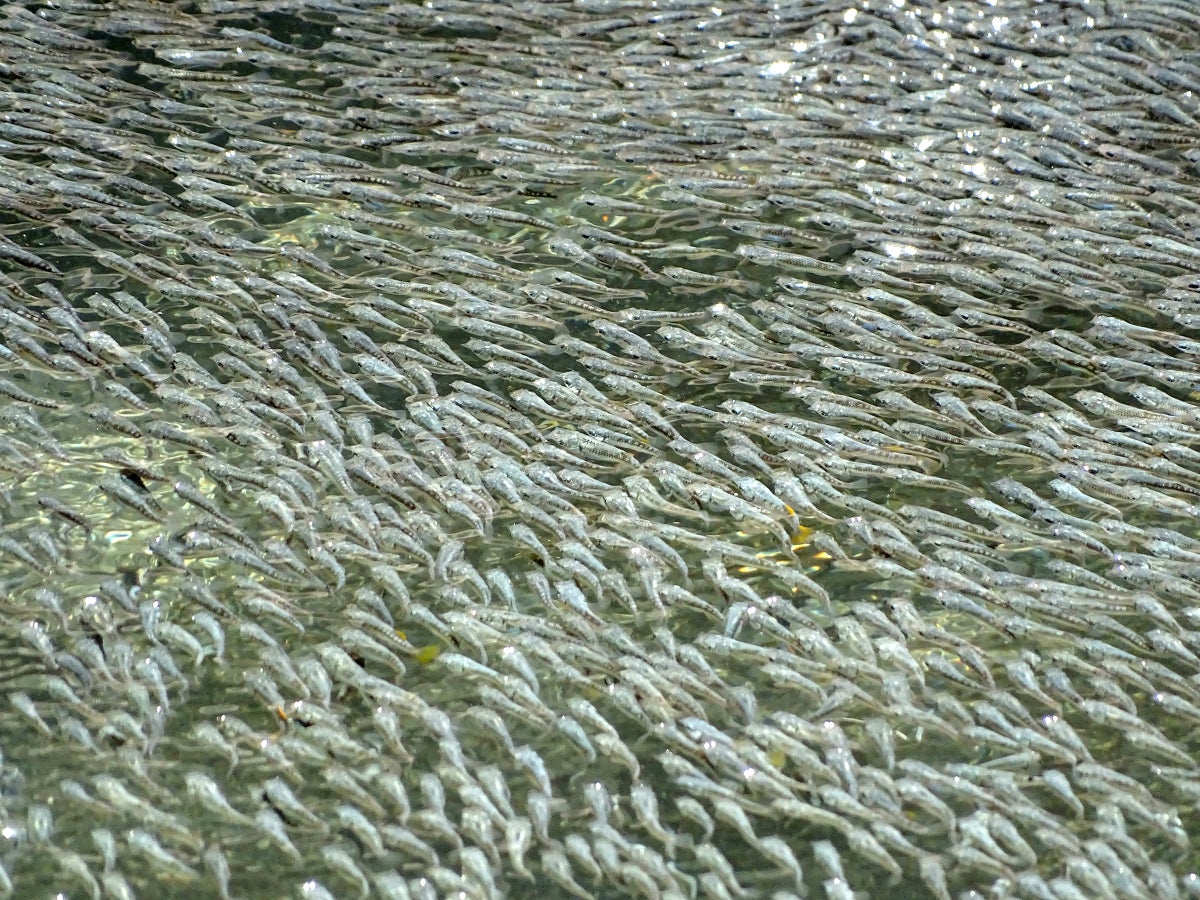
The answer is they created the waves you can see below by flicking their tails. Once a fish begins the process it takes about 1/2 second for the closest fish to join in. The result is this makes it very difficult for a predator to target any individual fish, Of course no defense is perfect against all birds and some do get lucky.
What really amazed me is that any fish was able to thrive in this water and then how they defended against predators.
The same program then had a piece on Sea Turtles and how they come ashore to bury their eggs a few feet under the sand. When the time comes they all hatch out at the same time and then make for the water. Many get eaten by birds but by hatching all at the same time a lot of the turtles make it.
Since the eggs are at varying depths the ones at the bottom are in cooler sand and tend to develop more slowly. How is it they all can hatch at the same time?
I caught a piece on TV today about these fish. They are quite interesting as the above describes. The program explained how these fish, which live in great number close to the surface, manage to avoid being predated upon by the local birds.
The answer is they created the waves you can see below by flicking their tails. Once a fish begins the process it takes about 1/2 second for the closest fish to join in. The result is this makes it very difficult for a predator to target any individual fish, Of course no defense is perfect against all birds and some do get lucky.
What really amazed me is that any fish was able to thrive in this water and then how they defended against predators.
The same program then had a piece on Sea Turtles and how they come ashore to bury their eggs a few feet under the sand. When the time comes they all hatch out at the same time and then make for the water. Many get eaten by birds but by hatching all at the same time a lot of the turtles make it.
Since the eggs are at varying depths the ones at the bottom are in cooler sand and tend to develop more slowly. How is it they all can hatch at the same time?
The turtles almost fully developed make sounds which are heard by the lesser developed ones lower in the nest and they respond to the sounds/ To discover this scientist dug into the nest and placed a small microphone in the nest and then recovered it. They were then able to hear and to record it all.Sea turtle eggs hatch simultaneously through embryonic communication, where faster-developing embryos in warmer, central nest areas trigger slower ones to speed up their metabolism. This synchronization, likely driven by shared oxygen/CO2 levels and sound cues, allows them to emerge together as a "turtle boil" overwhelming predators and increasing survival chances.
Last edited:


