How to explain this color variation in Aphyosemion (elegans group)?

confused_aquarist

Fish Fanatic
Joined
Oct 2, 2024
Messages
146
Reaction score
14
Points
18
Location
Tokyo
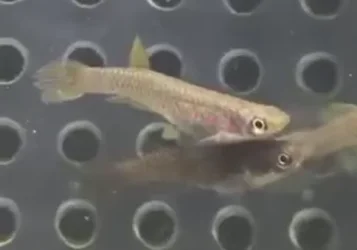
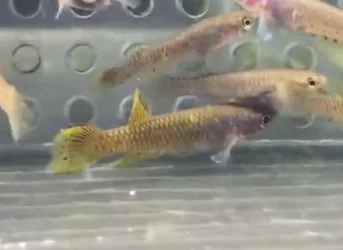
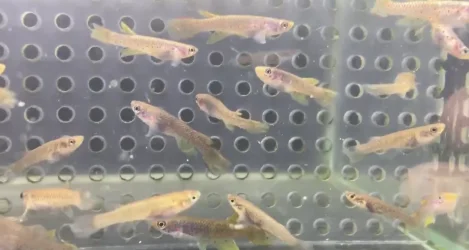
This is a picture from a while ago, taken at a shop which sold this species as wild Aphyosemion "cognatum".
Species name aside what actually caught my attention was that there was remarkable color variation among the individuals.
While they were all yellowish, a few of them were very dark, with black scales.
It's not that there's bluish hue which some elegans species have, it looks like black pigment.
In this photo there are a few black males. But I also happened to get a black female.
I'm not sure if this is a thing with wild individuals or if it's some kind of disease.
 

Attachments
  • cognatum.webp
    cognatum.webp
    62.8 KB · Views: 115
  • female_black.webp
    female_black.webp
    7 KB · Views: 106
  • yellow_black.webp
    yellow_black.webp
    16.8 KB · Views: 71
Last edited:
I'm not too sure what they're being fed, maybe black worm or something. It looks like they're eating alot.
Can the scale pigmentation come from the food?
 
They look to me like Aphyosemion pollii. See how they look in 2 weeks, to see if maybe that's stress. They always come in beaten up from shipping, but they can become very impressive.

If you're patient...
polli (800x602).webp
 
Definitely not A. cognatum and I think @GaryE has nailed it...A. pollii. They are in rough shape and the color variation could be stress related and where they are individually in the process of acclimating.
 
They look to me like Aphyosemion pollii. See how they look in 2 weeks, to see if maybe that's stress. They always come in beaten up from shipping, but they can become very impressive.
I have never seen them turn so dark, it actually feels like something similar to babies turning orange from carrot overeating. Their stomach content is very dark so it seemed like from overeating.
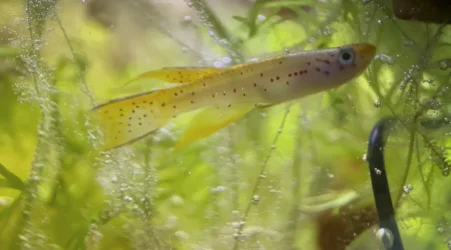
This batch from pet shop was very drab, and actually, after I acclimated them, they still look very drab.
But the F1 offspring look just like the ones in your photo, they're much more intense than the F1 parents. I'm not sure if wild individuals intentionally become drab to camouflage.
 

Attachments

  • aphyosemion.webp
    aphyosemion.webp
    48.4 KB · Views: 80
Many of the wild ones I received had dark gut contents for a few days. And with aquarium conditions, they tended to be more colourful. I think a lot of it is the beating they give each other in the bag. They overcrowd the bags out of Kinshasa, and there can be 300 in a bag I wouldn't want to put 10 in. They often come with shredded fins.

As well, the shippers in the DRC don't have the resources we'd expect - food for example. Killies aren't worth a lot, so they are jammed into pails until they're packed, and are often in rough shape.

That form of polli is a great one.
 
I know for apistogramma diet can make a difference; in the wild some areas they get a lot of carotene that give them a lot more orange/red then they will have in the aquarium unless one can reproduce the concentration.
 

Most reactions

Back
Top