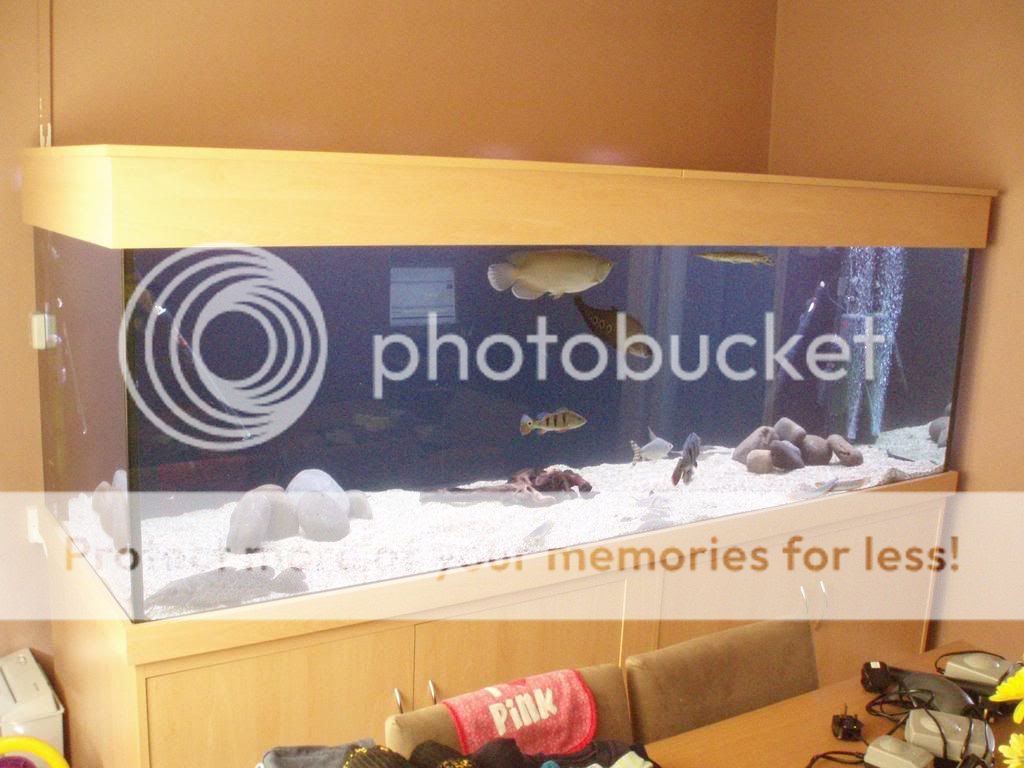
Filtration Advice Required

One filter now and another later sounds like a good idea. Cichlids, plecs and a few shrimp will be in there, so following advice given by Mark7616 i think I will eventually use a pair of filters to keep the water clean. Also, perhaps a constant supply of clean water would be in order?
 
If you're going for cichlids and plecs defiantly get two canisters.

I think what most people do is stuff one with ceramics biological media and the other with mechanical, sponges, wool and stuff.
 
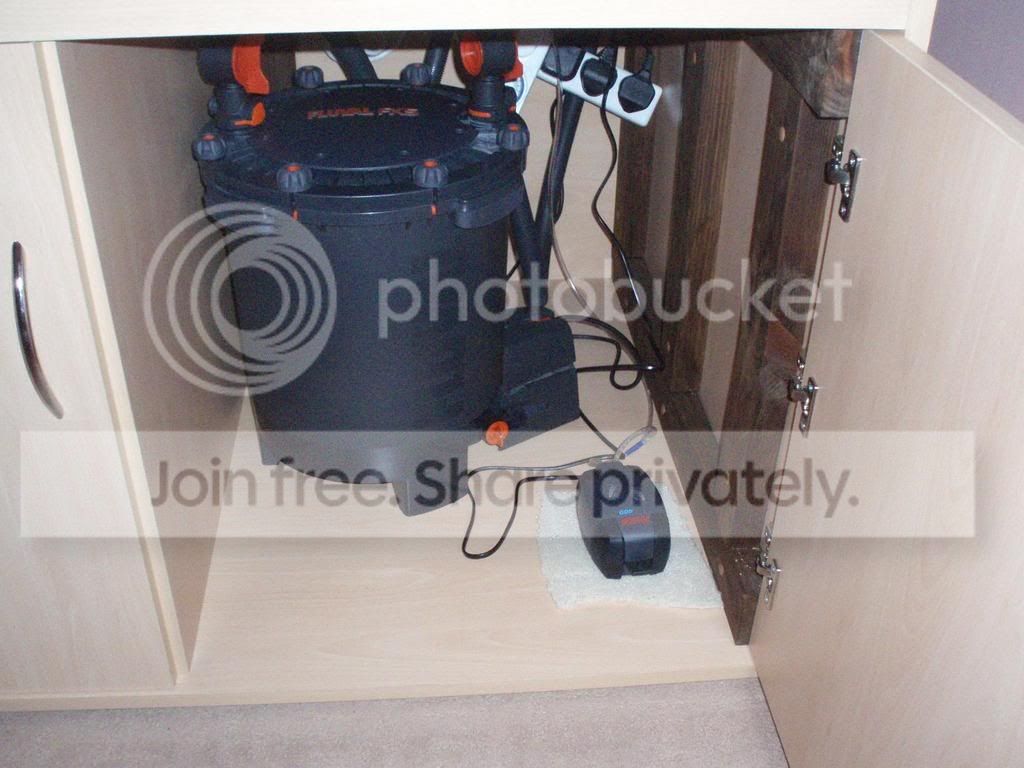
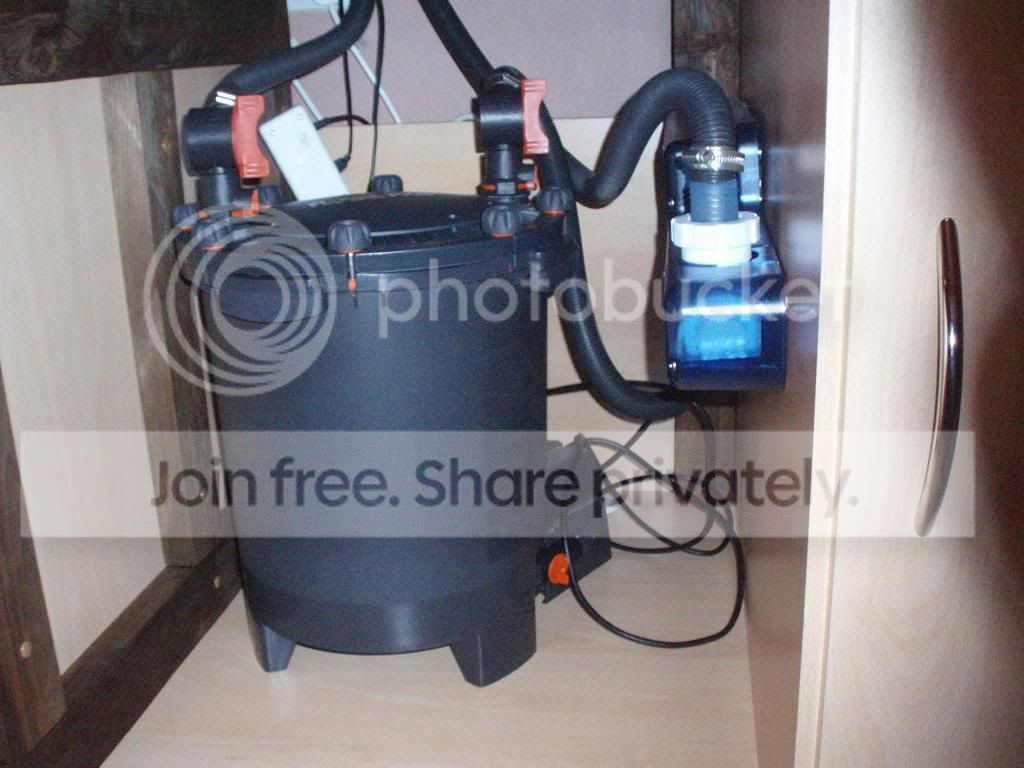
I would get 2 fx5`s from the off mate its an expensive cost to start with but its best in the long run. Fx5`s have sponges around the baskets and I fill all 3 compartments on both canisters with ceramic rings and thats it. Then on my internal 2252`s I have 3 baskets the bottom is just an eheim sponge collecting the crap out of the water and the top 2 are filled with polyfilter which I change every 3-4 weeks which is costly at about £6 per sheet and I use 4 but I like my water crystal. Here is a few pics of my setup to give you the basic idea.

Right hand filter and eheim air pump.
Picture509.jpg


Left hand filter and UV steriliser
Picture510.jpg


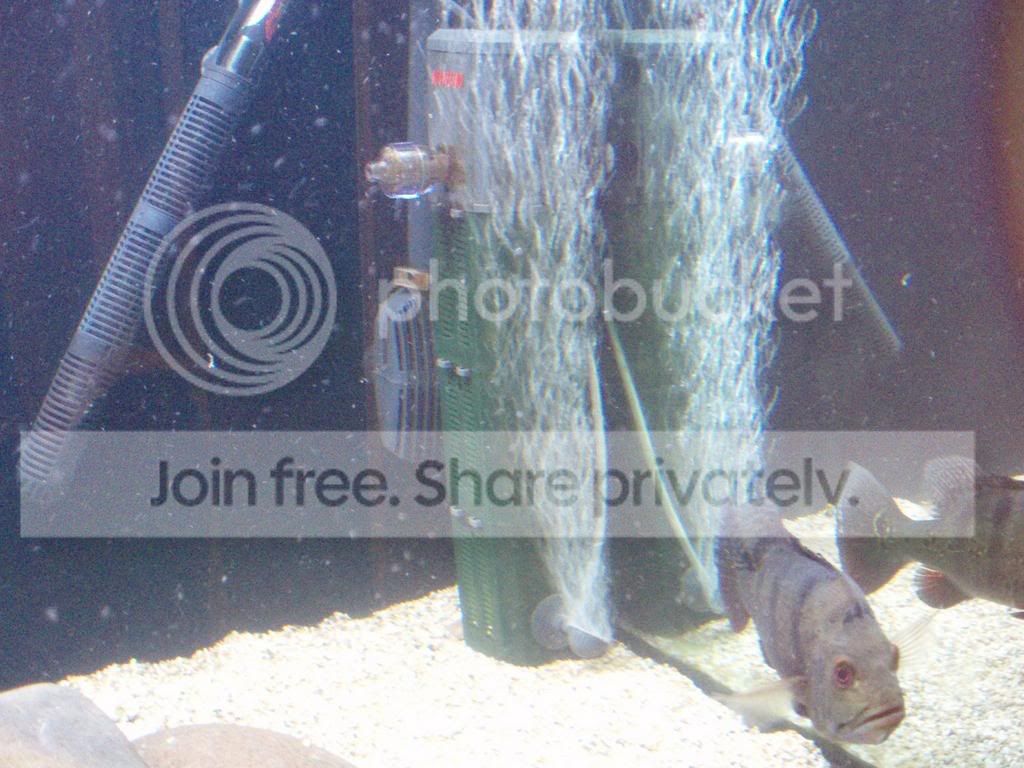
Right hand internal and the diffuser for the air pump these are excellent if you have digging fish as you are constantly trying to bury air stones these just suction to the tank or I keep them on the internal.
Picture513.jpg


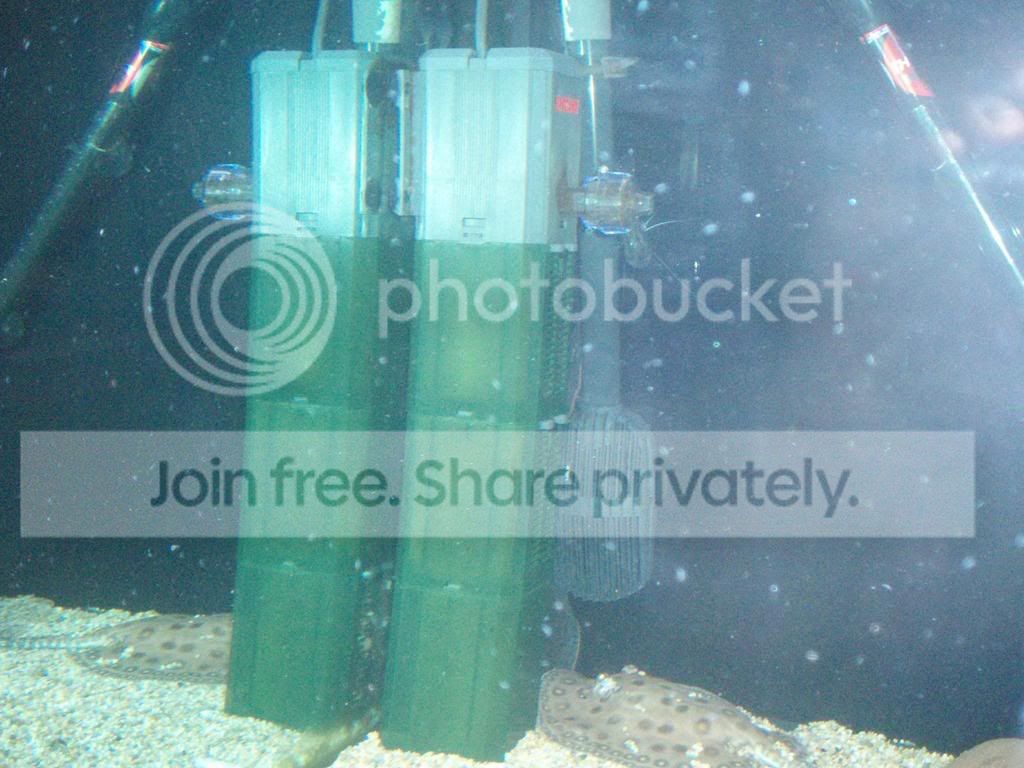
Left hand internal waiting for eheim pump to turn up.
Picture511.jpg


Full tank shot water not looking so clear as I have only just fed so its looking a little cloudy.
Picture470.jpg
 
Indeed, I would entirely agree with that sentiment (same principle applies with the cars I build and restore. Do it once, do it right).

So, my shopping list so far is:

2 fx5`s or similar

And thats where it ends just now... UV steriliser? Diffusers? Internal filters? Necessary? Like I said, out of my depth and, well, my 80 litre tank has a filter, an air stone and thats ya lot! So not a CLUE what all this other stuff is! I'd rather attack it with a shopping list, an idea of what stuff is, looks like and what is needed to make it work. Your pics are very, very helpful mate! Thank you for taking the time out to help me here!
 
Or you can go down the custom sump route

90 gallon plastic water tank, the main void is filled with plastic hose rings

post-585-1193772984.jpg


Reverse trickle filter

post-585-1193938299.jpg


Wet/dry trays

post-585-1193938377.jpg


powered by this

post-585-1193774451.jpg
 
Umm... Ok! I'm slowly starting to get my head round all this. How exactly does all that work? I'm pretty good at getting my head round mechanical stuff (can't be more complicated than an engine!). So, you have a big pump pulling water into a sump... From there what happens, what do the different buckets do (trickle filter and wet & dry trays), what are tehy filled with, and how does it all go together?
 
Thats pretty much the principle mate and sumps are excellent but a word of caution if this tank is in a fish house great but if its in your house sumps are noisy. Thats the reason I dont sump although many people do its personal taste really.
 
Gravity delivers the water from the tank to the sump, the tank can either be drilled to take pipework or have an overflow box clamped on the side (over flow box explained http://www.csd.net/~cgadd/aqua/overflow.htm) The water then goes through what ever filtration you have and the pump returns the water to the tank.

The design of the sump depends on what you want it to do here is a page showing different examples of sumps for marine tanks but most of these ideas work in freshwater as well http://reefkeeping.com/issues/2003-01/gt/index.php

A wet/dry stage has the filter media suspended in baskets with the water draining through it, because the media is exposed to air there is a greater mix of O2 so the bacteria can break down the ammonia and nitrite quicker and mulitiply faster.

A trickle filter stage is where the water flows theough the media very slowly so that the water is exposed to the media for longer so all the ammonia and nitrite is broken down before the water is returned, the down side to these is that they can take masses of oxygen from the water.

My filter stages are filled with Alfagrog which is a highly pourous ceramic rock.
 
A sump looks like a nice idea. Though finding the room for it will be a nightmare, and given that I am already struggling to find ways of supporting the tank, I could do without the extra weight of the sump and water too.

So, my shopping list thus far:

2 bigass filters.

Anyone care to add to that?
 
Three 300 watt heaters and either a couple of powerheads or internal filters to provide water movement in the tank.
 
Have just realised, if I put the tank in the right place I have an unused cupboard under the stairs that could be next to the tank that I can put a sump etc in and hide it away nicely. Which is the cheaper option? The sump idea or the filters? And which is most effective? If I were to use a custom sump, what exactly would I need?
 
When it comes to big tanks there is no cheaper option, just things that will cost you loads and things that cost even more :lol:

A sump is by far the more effective filtration as you can customise the design to suit the fish you keep, but commercial filters are neater and easier to install and run.

To build a sump you would need a tank of some kind that can hold all the water above the drain point in the event of a power out, this usually works out to about 10% of the main tanks volume; a pump that can turn over the entire volume of the main tank at least 3 times per hour and prefferably closer to 5 times; enough pipe of your chosen diameter to plumb the tank to the sump and back again; all the various bits and pieces to build the sump design.
 
So the sump needs to be high up so that in the event of the power being cut, the gravity draining would cease once the sump level exceeded that of the drainage from the main body of water, have I read that right?

Pump that shifts 5000 litres an hour, lots of plumbing and baskets to hold the filtration medium? The medium you are using seems to be far more simple and make far more sense than the baffling things people put in their canisters! UV steriliser necessary? I think I'm getting my head around all this now!

Thank you for your advice here matey, it's a HUGE help!
 

Most reactions

Back
Top