Decorating water with teabags

GaryE

Moderator
Staff member
Global Moderator ⚒️
Fish of the Month 🌟
Joined
Oct 14, 2011
Messages
9,953
Reaction score
17,562
Location
Eastern Canada
I've been looking at the behaviour of my fish with tannins. I'm doing no testing or chemical analysis - just pure behaviour. I've tested in the past and my water chemistry hasn't moved significantly.

I have green tea, rooibos and decaffeinated black tea.

Green tea starts slowly when you suspend a bag in the tank. The results aren't immediate, but they become very dark after 24 hours. I go with one teabag per 10 gallons.
Rooibos stains the water faster, and gives a nice glow - a bit more golden looking compared to the dull dark of the green tea.
Decaff black tea gives a quicker version of what I see with the green tea - a heavy colour under my led lights, but a very natural blackwater tone.

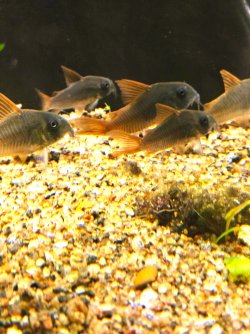
Behaviour? I have some blackwater Hoplisoma concolor (ex Corydoras) that were hiding a lot under strong light. They have some reddish brown marking on the back half of their bodies, not unlike the 'new' concolor types that are selling for very high prices. They've gone from hiding a lot to being out and about almost instantly, once the tannins kicked in. I didn't get the same results from dimming the leds. Will they spawn? Who knows.

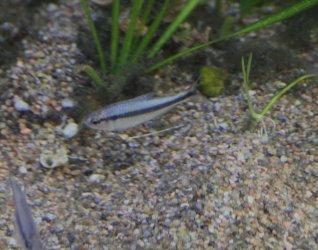
The Characins in the tanks are also more active, and like the Hoplisoma, their colours are suddenly more vibrant. I have H margitae and melanostichos in tannin tanks, along with cardinals and glowlights, and they look significantly better.

So many people hate brown water, but it gets results. The chemical changes aren't major, but the behavioural ones are good, with blackwater fish. They're often forest fish, and we tend to keep them like they're on an open savannah. Too much bright light gives them headaches?
 

Attachments

  • concolor2.jpg
    concolor2.jpg
    327.8 KB · Views: 14
  • melano1.JPG
    melano1.JPG
    285.6 KB · Views: 9
I’m getting some exceptional colors in my tetra tank, with no color to the water… it’s highly shaded by vines between the higher mounted lights. and the water’s surface, and is exceptionally highly planted with both terrestrial plants growing out of the water, and aquatic plants… I let a lot of the dead leaves fall into the water, but they don’t seem to color it at all… since the teas come from plants, I wonder is the boost in color comes from compounds released, rather than from the actual color of the water???
 
It's a mystery to me, and I don't know of research. I know the fish react to shade by intensifying their colours. That's the old black gravel trick.
What I find the tannin stained water does is modify what we see. The colours change, to our eyes. Instead of blue in my cardinals, I get a brilliant blue green.
It isn't for everyone, as the number of threads where people want to get rid of driftwood tannins proves. Most people want clear water, and would see these tanks as dingy, or even dirty looking. They certainly wouldn't be appropriate habitats for non blackwater fish.

To me, the only negative is something I noticed today. My Enteromius cf. jae barbs are red to begin with, and were caught in very tannin stained dark water in Gabon. I see that as I increase tannins, their bright red colours become camouflage. Hmmm.
 
I have created two black water 20 gallon long tanks for a. cacatuoides pairs using RODI water, catappa leaves, oak leaves and alder cones. Of the three tannin containing flora, the alder cones produce the most pleasing stain. I’m not certain which offers the best anti microbial action. But if intensity of stain is proportional to ant microbial properties, the alder cones win out.
 
Every time I see pictures of actual habitats the water is muddy or dark or something in between , it’s rarely ever crystal clear . Also , every time I see an aquarium with a lot of algae and green water the fish are very active . Dark water from whatever leaches out of organics should have the same effect and apparently does according to Gary’s observations . Something to think about .
 
From my experience with making stained water for Altum angels I found the following to be the case.

I used several things to help me lower pH and to create stained water. However, the botanicals used for this do different things and offer different benefits. It is fairly easy to find information about using Catappa (almond) and Oak leaves but harder to find for alder cones and Rooibos tea. I used, alder cones, and Rooibos tea but also a bit of muriatic acid.

I put the almond leaves into the water directly, did not use oak, added alder cones in a bag in a filter and brewed the Rooibos and added the tea"" to the water. The leaves, cones and tea are have a variety of medical benefits for the fish. My research indicated that almond leaves offered more benefits than oak but, for most of us oak can be free while almond leaves must be purchased. I bought all three botanicals but did so on the wholesale level in larger quantities which lowered the cost.

One note, it is also possible to use Rooibos in a fine mesh bag in a filter.

Here is what I concluded:

- For the best staining I rated them in order of the best as Rooibos tea, Alder cones then almond leaves.

- For the best lowerer of pH I rated them in order ,most to least effective in lowering pH as muriatic acid, alder cones and almond leaves. Rooibos does not lower pH and may actually increase it by about 0.1.

- For the best softening of the water I rated them as doing this best as alder cones and then almond leaves. Neither muriatic acid nor the Rooibos provided any help with this.

- Easiest to use would be from most to least I would rate them as being muriatic acid added directly to the tank and changing water is ml volumes, almond leaves directly into the tank, Alder cones in a bag in the filter and finally Rooibos brewed and added to the tank and changing water.

- For the least to most messy I rated them from least to most as being the acid, then the alder cones in the filter as cleaning them out of the bag was a PITA as they turn to mush. I replaced them every 3-4 weeks. Almond leaves went in easily but, I would clean out the old ones, which broke down, and replace them every other week. The Rooibos needed to be brewed and let to boil some unlike most tea. I would do the brewing in the microwave and then the mixture had to be well strained before going into the tank. The residue was mushy moreso than the cones.

-Most economical from cheapest to most expensive was the muuriatic acid. I bought $100 of alder cones which lasted for all the years I kept the Altums and I sold a lot of them as well. I sold the altums over a year ago and still have some cones left. Almond leaves I got large ones wholesale in 50 leaf bags and got about 50 bags. Again I sold more than I used which was about 12-15 leaves/month in a 55 gal. tank. I bought many kilos of Rooibos and sold a bunch, I still have a bunch left and I have little use for it now.

Last Jan. I put three bags of botanicals into the club auction. Each one contained a 50 leaf almond leaves, 25 alder cones and 1/2 pound of loose Rooibos. I still have some leaves and cones and of course acid which we use more in the swimming pool than I used in the Altum tank. I would occasionally put some of the botanicals into my fish club's monthly meeting auction and would sell them when I was in the vendor room at a weekend fish event.

Basically, when all was said and done the only thing I ended up having to pay for out of pocket was the acid. All the rest of the botanicals I sold enough of the cover the cost of what I used and now still have.

The above is my personal experience using these 4 things. What I do know is that all of the botabicals have different types of "medicinal" benefits which include antibiotic and anttifungal properties and a few other things as well. I would say that in order of overall benefits I would rank them as Rooibos tea, almond leaves and alder cones. Using all three was a great benefit. I never had to treat the altum tank for anything in the years I kept them. having them come in as imports what the biggest risk.

One last observation about acid water fish for those who are not familiar with this. Most bacteria cannot live in acid waters. Some can, but many of the bad bacteria we may encounter in our tanks with a neutral to basic pH levels cannot live in acid water. There are plusses and minuses in this when we keep acid water fish in an acid water tank. In the wild, because the many of the pathogens do not exist, the fish have not developed any immunity against them.

When we put such fish into out tanks where such pathogens are present, the fish have no defense against them. It is important with wild caught fish from acid waters that we keep them in similar parameters. We should also be carefull about what other fish we might add in with acid water fish. This also works in reverse, The acid water fish can birng in pathogens against which non-acid water fish have little defense. When one is working with the more extreme end of parameters, it is important to be aware ot the potential pitfalls.

(edited fix typos, some missing words and grammar.)
 
Last edited:
I am surrounded by alder bushes - across the street along there must be over a thousand bushes, and in season, I've collected bags full of cones. I once looked up to find a deer staring at me as I harvested, giving me the stink eye in a way Bambi never would have.

I like oak leaves because of the way small fish make use of them as structures.

One last observation about acid water fish for those who are not familiar with this. Most bacteria cannot live in acid waterss. Some can, but many of the bad bacteria we may encounter in our tanks with a neutral to basic pH levels cannot live in acid water. There are plusses and minuses in this when we keep acid water fish in an acid water tanks. In the wild because the pathogens fo not exists, the fish have not developed any immunity against them.

That's such an important observation for us to remember.
 
I have planty of oaks on the property. For some reason I prefer the almond leaves and they can make good hiding places for fish just like the oak I assume, I have only used them with Altums. All my other tanks are basically tap water params which are 7.0 pH and TDS which range from a low, during drought times, of 53 ppm to a high during periods of excess heavy rains of about 120 ppm. Normal is in the area of 83 ppm.

My tanks are all close to the above parameters. Depending on the plant load and if thee ae inverts as well, I may have to add some SeaChem Equilibrium. While this is normally used to increase GH, I am greatly underdosing it. I am looking to increase things beeing used up because there is a heavy loading pf plants as well as javong shrimp and assassin snails in a tank. This tend to use up a lot of what iis in Equilibrium. Other tanks with less damns made on these thnings do not need a boost. Normal tap water and weekly liquid Tropica ferts are usually enough in tanks with not as many plants and which may have just a few or no shrimps and/or snails.

This means all my experience which softening water and lowering pH have been towwards the acid sode of things. I should admit that before I gor my 1st RO/DI unit for the Altums, I did my dry/rainy season simulations using my tap for the rainy and then running a big amount of crushed coral in a filter hug in the can with the new water that would going into the tank for a day. Then I would ad Epsom Salt and a pinch of baking soda.

I did not want to raise the pH much but I needed to get the tap water up to the mid 170 ppms at the peak of the dry season right before the onset of the rainy. I have seen parameter numbers for the Rio Xingu taken at the peak of the dry and then the lowest number for the onset of the rainy but which were taken in different years and locations for the Big Bend of the river.

What I learned was the absoltue parameters at either end were fairly flexible, but had limits. The general rule of thimb was the peak of the dry season should be about double what the low for the rainy is. In addition the simulation had to do close to a 3 month dry season with the params going up steadily. But the onset of the rainy was going to drop the parms close to in half over 24-36 hours. From there, they should drop the rest of the way to half and then stay there until one needs to redo the simulation.

The Amazon and some of its tributaries, called "whitewater" rivers, bear rich sediments and hydrobiological elements. The blackwater and clearwater rivers, such as the Negro, Tapajós, and Xingu have clear or dark water with few nutrients and little sediment. The Xingu is crystal clear and carries little in the way of sediment.
from https://www.zebrapleco.com/core/zebra_pleco_habitat.php

While this thread is concerned with staining, most stained rivers are also acid. Rivers the like Xingu have low TDS and slightly acid to neutral pH. The Stained waters tend to be acid and the rest tend to anywhere from neutral to higher pH like theAfrican rift lakes. High pH and harder water tend to go together, but there are a few exceptions to this. Sulawesi would be an example.
 
I use and have used all the above except alder cones. My favorite though are beech leaves (which are also my favorite trees) especially because of their smaller size and aesthetically how well they work in smaller tanks.
 

Most reactions

Back
Top