caffeine thought of the day... is a perpetual aquarium possible...

Magnum Man

Fish Connoisseur
Tank of the Month 🏆
Fish of the Month 🌟
Joined
Jun 21, 2023
Messages
6,798
Reaction score
5,752
Location
Southern MN
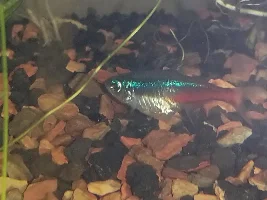
what I'm meaning, isn't maintenance free, but something with a full food cycle, where feeding is not needed... certainly not possible at my current tank stocking levels, but watching my Hillstream tank, made me think of this... if that tank and system stayed the same, but it only contained 1-2 ( maybe more, added slowly as the tank seemed abundant ) biofilm eating fish, removing the fish higher up the food chain, and add in enough micro crustaceans to maintain a breeding colony, and make my sterile aquarium algae more like real aufwucks, and add 1-2 fish as needed to maintain a balance... still doing water changes, maybe less frequently... anyone here ever tried to set up tank, that no food needs be added???
 
Last edited:
In my nano tank my celestial pearl danios never eat what I feed but seem to live off biofilm. I would stop feeding them but I have three other species of nano fish in the tank that do eat what I place in the tank.
 
I suspect my 120 gallon could support carefully chosen fish - maybe a population of 10 or so 2 inch fish. I've noticed in my slightly crowded grow out tanks, fry will still grow when I'm away for 2 weeks, and no one feeds them. But they would reach a point of famine very quickly.

I had a friend who kept fish in a rough old cellar of an older house, and who had a chronic leak in his filter. When he took it apart, he found Rivulus killies had bred in a shallow puddle behind his racks, probably surviving on the tiny bugs that thrive in all damp places in houses. He knew they'd jumped a year before but couldn't get in behind the tanks to seek the 'fish chips' he expected.

It's technically possible, not advisable and dependent on which fish, what set up, etc.
 
It is interesting. I have been observing my nano tank for about 30 minutes after I placed a piece of Repashi Grub and Hikari micro pellets into the tank. The shrimp and snails go right for the food. The CPDs and several 6 week old a. cacatuoides ignore the food and are grazing on the tank’s bounty. This happens often.
 
Yes , I think it could be possible but only with a very large aquarium and very small population . I would plant it and seed paramecium cultures and other organisms long before adding fish . Get the little creatures established first and then sit back and see what happens . The fish would have to be small too and not something that breeds prolifically . Can’t think of a suitable candidate right off hand .
 
This topic fascinates me. This would be as close as we could get to replicating nature.
So what....20 tetras in a 1000 gallon tank?
20,000 gallons to reproduce the entire ecosystem? One Cichla ocellaris as the top predator. Constant fresh water running into the tank would be nice.
Given the right tank and inhabitants I think it might be possible but for how long? One little thing goes wrong and then you have an imbalance between predators and prey.
 
It always needs mechanical support. If you want a cichla, then flood two adjoining houses with a tunnel between them. But if you had a heated greenhouse with a couple of 100 gallon ponds, you could keep small insectivores.
But @Magnum Man know his roots in terrestrial plants, and our fish come from THAT world - one that doesn't just exist in a glass box. A greenhouse could provide ants, small flies, pollen and other foods that fall in or lay eggs in the water. The environment outside the water is part of the aquatic world too.
I have a lot of roots in plants in my fishroom, as well as potted tropical plants. A lot of small flies and such get in in the summer when the fans are in the windows, and survive the winter. I have a healthy sundew, a Venus flytrap and some pitcher plants that are thriving in my "bogarium" tank.
With an out of the house garage fishroom, I can tolerate a few small creatures that are outside the tanks but part of the environment the tanks are in. I have no ants year round, but they wouldn't upset me out there. I do have established non biting gnats and such - not so much i see them often.
If I get hit by a meteor in summer, I expect my fishroom would run for about 5-6 weeks. In winter with no power, 36 hours.

I would love to win a lottery and have a tank with one foot of water that ran all around a room, with different zones so I could watch how fish sorted themselves out with riffles, planted zones, open sand, shade, sun, etc.
 
Last edited:
If I made a riffle section in a tank, I'd have a lot of rounded rocks, probably a gravel substrate and shallow, really fast water. It's like a micro-rapids, a habitat that's really common in small streams in nature.

Some of my best friends, I mean some of the best fish come from riffle habitats.
 
@GaryE .... I tried to do that in one tank. at the base of a rapidly rolling bubble waterfall, but having sand in the tank, kind of diffused the look I was after... it fills in around my small stones... I think I would need to add several cups of 1-2 cm stones to mix in with 5-6 cm rocks, to hold back the sand and keep the look...

I can easily blow the sand out, while refilling water, but it slowly refills back in between water changes, as I don't have enough actual water flow there to keep the sand washed out, at this point it's more perceived water flow, from the bubble waterfall... my canister filter has ended up staying in this tank... I suppose I could plumb the discharge down the side of the tank to the bottom,, and out into the tank length, with an elbow to keep the sand from settling back...
 
If one thinks of a pond as a very large aquarium: I had a pond, probably around 30,000 gallons or so at a guess, that fit this criteria: It had ongoing populations of various fish. I didn't feed them; the only inputs were what nature provided: Occasional fresh water (it was fed by an intermittent irrigation ditch), sunlight, various critters and plant matter falling into the water. There was an electrically operated waterfall pump, but that was more aesthetic than biolocical necessity.

The fish absolutely thrived. In fact, aside from seasonal algae blooms, the only problems I ever had with it were overpopulation, resulting in winter die-offs under the ice. The great blue herons and kingfishers helped a little, but it remained an ongoing problem.

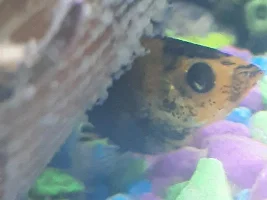
I don't see any hard and fast reason similar results couldn't happen in a large aquarium. Of course, in an indoor aquarium, we have to provide the things that nature provides outdoors, especially light and water circulation. I know for almost a fact that my little badis would be absolutely fine in the 55g if I removed all the other fish and quit feeding (I'm pretty sure he eats baby snails, of which there is an abundance), and I'm completely confident that the tank as it is now, sans other fish species, could easily support a breeding population of badis .

So there you go.
 

Most reactions

Back
Top