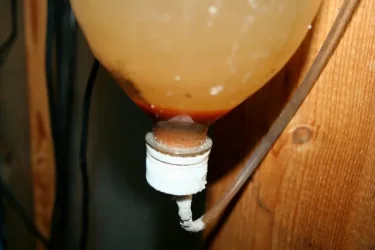
I have minimally hayched BBS, I did this when I had angel fry. I gpot into a major discussion on Aquaria Central years agi when I quote a marie biologist on the nutriional value of Brine shrimp and BBS. it ended up with another member being banned from the site. I read an article, the second of two, on hactching and feeding live foods punlished on The Advanced Aquariist, An online publication from reefs.com. However the information also can be applied in many cases to Fresh water fish. I actually corresponded with the author.
Aquarium Invertebrates: Nutritional Value Of Live Foods For The Coral Reef Aquarium, Part 2
by
Rob Toonen | Jan 15, 2004 |
0 comments
Dr. Toonen is a Research Professor at the Hawaii Institute of Marine Biology. while his focus is on salt water fish etc. what he wrote about broine shrimp applies equally to fresh water fish. Here is how he describes his background:
I did my Master’s Degree in the
Pawlik Lab at UNCW, before moving on to a PhD in the
Grosberg Lab at UC Davis. I joined the faculty at the
Hawaii Institute of Marine Biology in 2003, but I have a hard time describing my research program in a few sentences. During my research career, I have used a variety of approaches (including individual behavioral assays, ecological experiments in both the field and laboratory, and molecular genetic tools) in an effort to address a variety of interesting biological questions.
Let me quote some of what he wrote on Brine shrimp and specifically on BBS.
"The
nutritional value of adult and baby brine shrimp can be very different, and even if we consider only newly hatched baby brine shrimp, it is not possible to make any sweeping generalizations about the nutritional value to your tank. The reason
that nutritional value varies so much is because it depends on a number of factors, including the age, the source, and the quality of the brine shrimp “eggs” from which baby brine are hatched how nutritious the newly hatched brine shrimp will be.
How much difference does the source and quality of your brine shrimp “eggs” make? Well, there are great differences in the nutritional value of different batches of baby brine shrimp hatched from different sources, and the dealers separate the stock according to the quality into at least 4 or more categories: premium, high- and low quality aquaculture grade, and then hobbyist grade (in that order). As suggested by this list, the brine shrimp available to us in the hobby is not exactly the best quality stuff out there. Even among the aquaculture grade cysts there are enormous differences in the nutritional profile of the baby brine hatched from different locations.
Well, I’ve been talking about enrichment throughout this article, but I haven’t really given you any guidelines for how exactly to accomplish that enrichment. Let’s use brine shrimp as an example, and go through how to enrich your food before feeding it to an aquarium. When
Artemia nauplii first hatch (Instar I), they do not have a complete gut, and it is not until they develop to Instar II that the baby brine start to feed. The time of development to Instar II depends on a variety of factors (most importantly temperature, but also salinity), but occurs within 6 to 30 hours after hatching. At 28°C (roughly 82°F) it takes about 8 hours for the newly hatched nauplii to begin feeding, and as the temperature drops, that time becomes much longer. As soon as the nauplii hatch, they begin to digest their yolk and become less nutritious with time after hatching, however, once they reach the second instar, they can begin to feed, and you can enhance their nutritional value by feeding them a highly unsaturated fatty acid (HUFA) supplement that provides high concentrations of essential fatty acids for the health of most marine animals (reviewed by Coutteau and Mourente 1997; Rainuzzo et al. 1997; Sorgeloos et al. 2001).
Many people seem to have the idea that you’re trying to soak the nauplii in the stuff to coat them before feeding. While that may be true of
frozen foods, it is not particularly effective, and most of the enrichment solution ends up floating freely in your aquarium as dissolved nutrients (just as if you had dumped it into the tank directly) rather than getting into your fish. In this case, what you’re really trying to accomplish is to get the baby brine shrimp to eat the stuff, so that they are basically swimming grocery bags full of those nutrients when you feed them to your reef tank. The problem is that baby brine shrimp are very inefficient feeders, and it takes a long time for them to ingest enough of the HUFA supplement that they become “enriched” (e.g., Evjemo et al. 1997; Han et al. 2000; Han et al. 2001). For newly hatched brine at the second instar, it takes at least 12 hours to get decent enrichment – in fact, its much better to enrich your
Artemia nauplii for two 12 hour periods (with a water change between them to limit the growth of bacteria in the culture water). To clean the nauplii, simply pour the culture through a “brine shrimp net” (one of the fine, white mesh nets available at any pet shop) and rinse them a couple of times before setting them up in clean water and adding new HUFA. After the two 12-hour feedings of the HUFA supplement, the nutritional value of the nauplii is typically much greater than when they are newly hatched (reviewed by Coutteau and Mourente 1997; Rainuzzo et al. 1997; Sorgeloos et al. 2001).
The same is true of adult brine: they are largely devoid of nutritional value when you purchase them at the local petshop, and it is important to enrich them before feeding brine shrimp to your fish. For live adult brine shrimp, it is relatively simple to enrich them with a HUFA supplement (such as Selcon or Zoecon), and that greatly enhances the nutritional value of these animals as a food for your aquarium pets. Brine shrimp become more efficient feeders as they grow, and as a result, larger
Artemia can be enriched in shorter times due to that increased efficiency of filter-feeding. In fact, although live
Artemia can benefit from periods of enrichment equivalent to those of the nauplii, adults can be significantly enriched in as little as about 1-2 hours of feeding in a HUFA supplement. Be enriching live brine prior to them being introduced to your
reef aquarium, you not only provide a popular treat to your animals, but also gain the maximum nutritional benefit from feeding these foods to your pets."
You can read the entire article here
https://reefs.com/magazine/aquarium...ive-foods-for-the-coral-reef-aquarium-part-2/
Bear in mind that the article was written for SW keepers, but a lot of it applies to FW as well. The article discusses other foods we aliso use in fw and there is some specific info on fw feeding. You will learn a lot by reading it.
Despite the article being from 2004 it is still some of the better information I have read re live foods. After the Brine section it covers a number of relevant topics which include: Tubifex or Black Worms, Freshwater Crustaceans, The Water Fleas ( Daphnia And Their Relatives), Freshwater Copepods (e.g., Cyclops ), Freshwater Amphipods (e.g., Gammarus ), Mosquito Larvae, Ghost Shrimp And Crayfish, Squid, Shrimp, Mussels Or Clams On The Half Shell and Macroalgae, Nori Or Leafy Vegetables.
He also Cites the 16 articles he has quoted from or referenced in the paper.



 /piscespets.com/blogs/feature-products/tom-aquarium-brine-shrimp-hatch-n-feede